
Big Boy Breakfast Because It’s Almost Lunch
With rare exception most of us should be eating normal sized meals. Breakfast included.
I went to bed hungry, which means I woke up hungry. I woke up at 6 am. Worked out from 9 - 10:30 am. I finally sat down to eat at 11 am. I was hungry, so I started with this.

Crock pot chicken, crock pot beets, sautéed mushrooms, avocado, boiled broccoli, chopped red onion, and chopped red cabbage. I put on a dressing made of olive oil, fig balsamic vinegar, red wine vinegar, sriracha, dijon mustard, pickle juice, and salt.
But after finishing it I was still hungry and I knew I had a long day of packing ahead of me, so I had this.

Overnight chia (2 tbsp of whole milk yogurt, 2 tbsp of chia, 1/2 cup soy milk), coconut flakes, ground flaxseed, frozen blackberries, raspberries, blueberries, brazil nuts, walnuts, almonds, pecans.
I’ve recently been thinking about the advice of “eat a big breakfast, and taper the rest of your meals throughout the day.” I think this is bad advice for the majority of people. Most people nowadays sit behind a desk for their work. And, most people fail to get the daily recommended amount of exercise each day (which still wouldn’t be enough to justify a big breakfast). Between those two factors, desk jobs and not exercising, I think it’s foolish for most people to eat a big breakfast.
Big breakfasts are reserved for people who perform manual labor, or who are professional athletes. In other words, people who need and are going to use the fuel. For the rest of us, eat a normal sized breakfast. Today was an exception for me, but on most days I go for 3 equal sized meals, and minimal snacking on fruit and nuts.
Cheers to your practice.
The Behavior of Change
Random thoughts, perspectives, insights, and experiences I’ve had during the week that have shifted my view or focus.
Thoughts and download from the week.
Fearfulness is the most common state in a life that asks for no real change.
I’m going to try something new, and see if it works.
I’ve been thinking about something I heard on the podcast episode I shared last week. That is the idea that you can be happy, love yourself, and also be ruthlessly ambitious enough to accomplish your goals.
Elizabeth Gilbert tells a quick story about a guy who didn’t want to try her letters of love exercise because he thought it would make him weak. He thought that by showing himself love and compassion he would lose his drive, that chip on his shoulder, that he believed was the driving force behind his success.
I’ve feel that way too. Not necessarily in loving myself, although I could definitely benefit from more of that. But in my inability to take my foot off the gas. I hold this belief that if I slow down in any part of my life, that it’s going to create a ripple effect throughout every part of my life and ultimately lead to my demise.
If I watch too much TV, or eat something I shouldn’t, skip a day of exercise, or don’t have a book I’m actively reading, that it’s going to be the beginning of the end of my dreams. That I’m going to slowly descend into some useless human being, incapable of anything.
But in reality the opposite is actually true. It’s the times when I’ve taken my foot off the gas that I’ve felt the best. It’s when my mind is clearest and my body feels most aligned, fit, and capable. And by contrast, when I’ve continued to push it, despite all of the signs from my mind, brain fog and agitation, and body, fatigue and pain, is when I accomplish the least, regardless of the fact that I’m doing the most.
So, to hear her tell this story really resonated with me, and I think it also ties well into a recent insight I had while my buddy was visiting me.
Almost a year ago my buddy got laid off. It was completely unexpected. When he called me to tell me I was in shock, and at a loss for words. He had worked for this company for at least as long as I’ve know him, going on six years, and he’s one of the smartest, most ambitious, experienced, and well educated friends I have. He is also, not surprisingly, Type A.
So in the year since his layoff he’s been busy trying to find a new job. But, through no fault of his own, he’s been unable to land one. So during his visit I asked him, “in retrospect, knowing now that you’d be 12 months out of having a job, and still looking, would you have spent the last 12 months doing anything differently? Would you have given yourself a break, eased off the pressure you’ve been putting on yourself, and enjoyed your time more, rather than staying busy?”
I asked him this question because it’s a question that I have wrestled with many times since leaving my well paying and rewarding, albeit stressful, job 6 years ago. And I still wrestle with it today. But hearing about his situation made me once again reassess my own.
I could tell he didn’t like the question, and it made him uncomfortable because it forced him to question how he has been spending my time. Something I always question when it comes to my own life. But it’s an important question because it highlights the stress we put on ourselves as humans to be successful, even when nothing is wrong. It very much echoes the message that Robert M. Sapolsky tries to convey in Why Zebras Don’t Get Ulcers, and the message Boyd Varty shares in The Lion Trackers Guide to Life when he says, “no wild animal has ever taken part in a should.”
My friend and I are in the same situation in some respects, at least a it relates to the quality of our lives. Other than not having a job, and a steady income, not much has changed. We still eat the food we want to eat, live where we want, travel, have a roof over our head, a car to drive. For all intents and purposes, life is good. Yet we’re applying this relentless pressure to figure it out, not now, but yesterday.
The question of fulfillment and purpose always seems to come up, and with good reason. Figuring out how to spend your days when you have no “work” to go to can be difficult. It took me about two years to feel comfortable with it. But I’ve learned how to enjoy my days without work. I’ve settled into a good rhythm of activities that include exercise, reading, writing, volunteering, cooking, and now gardening, that I enjoy and keep me happy. I love my days.
But, despite that, the pressure is still on. I continue to pressure myself every day to figure it out, and work really hard to do so. That’s been my mentality for 6 years, and still, I haven’t figured it out. So maybe it’s time for a new approach. Back to Elizabeth Gilbert’s story.
What if instead of forcing myself to work and figure it out, I took the opposite approach. What if I fucked off when I wanted to fuck off. Watched TV during the day. Smoked weed when I wanted to smoke. Skipped workouts, and indulged in desserts when they called to me. What if I stayed up late, and slept in past the sunrise. Perhaps that’s been the problem. Perhaps that’s the love she speaks about that I’ve been denying myself, and it’s the reason I haven’t figured it out yet. Perhaps allowing myself that love, or level of comfort, rather than hindering my performance, like I believe it would, could be the catalyst to drive success.
In Tools of Titans Tim Ferriss talks about trying something new for 48 hours. He says, try it, and if it doesn’t work, you can always go back to your old ways. That same principle is something I’d been using even before reading his book. But hearing it from him has reinforced its practicality. So, that’s what I’m going to do.
Beth Lewis said in our class recently, “you can’t crush the gym, and life.” It’s true, and I’ve been trying to crush everything in my path. For once I’m going to take the opposite approach, and see where it takes me. Here’s to a new more lethargic way of being.
Informative podcast on chronic health in America, and the issues we face to fix it.
Joe Rogan #2210 - with Calley Means and Casey Means, MD - I don’t like listening to Calley Means. He’s a former political strategist and lobbyist for companies such as coco-cola. So I’ve ignored listening to anything he’s a part of, and it’s the reason I haven’t reads the book he co-wrote with his sister, Casey Means, MD, despite being very interested in what she has to say. I like Casey. She is one of the founders of Levels, the company I purchased my glucose monitor from earlier this year to experiment with. She’s a physician, a head and neck surgeon that left conventional healthcare to start her company and address the growing issue of metabolic health in this country, the root cause of most chronic disease. Metabolic disease is associated with mitochondrial dysfunction, and it’s believed that ultra-processed food, pesticides, plastics, and other toxins in our environment, in addition to the sedentary lifestyle most people live, is the cause of it. Levels, her company, is trying to change that. And after spending time on the dark side her brother is too.
Recently Casey and Calley were part of a panel of experts that included people like Jillian Michaels (her testimony is much see stuff), Max Lugavere, and Brigham Buehler, who testified in front of congress to sound the alarm about the growing health epidemic in this country and, more importantly, the cause of it.
I’m glad I put my dislike for Calley aside and listened to this one, because I learned a lot, and, the reality is, good on him for trying change the system.
I found this quote from Casey Means to be the most notable:
“Ultra-processed food is dead food” - Casey Means
Ultra-processed food, food that is stripped of all it’s nutrients and filled with harmful ingredients, now make up 70 percent of the calories consumed in this country. Casey nailed it with that quote. Far too many people are eating nutrition less food, and it’s a big part of the problem.
Book I’m Reading - Wildlife Wars
I picked this book up from one of the “free libraries” you see on the street. That was probably over a year ago but I just started reading it recently. I’m more than a third of the way through now, but these lines from the introduction had me reeled in from the jump. I would listen to anyone’s story who has the type of mind that sees the world in this way. It’s a great book, and Richard Leakey provides a great example of what being a leader should look like. One in which integrity and morals are not compromised.
From the introduction:
“Conservation of biodiversity may be a global imperative, but eating one cooked meal a day and drinking clean water are more basic to the survival of most of the world's population. Protecting elephants and conserving natural ecosystems remain my personal priorities. But I am not so sure this would be so were I ill, hungry, and living in despair. I enjoy fresh air, sunshine, and crisp starlit nights. I do so, however, knowing full well that when I need it I can find shelter. We must somehow find a way to provide for our own species if we are also to preserve others.”
“Clean air, clean water, plentiful forests, and a human population that is well fed, educated, and reasonably affluent is our goal in Kenya. Saving the elephants is symbolic—a means to achieve these greater objectives.”
This Weeks Harvest
Growing season is coming to an end but that doesn’t mean there isn’t abundance in our garden. In fact, a lot of our vegetable plants, especially our tomatoes, are thriving right now in the cooler Colorado temperatures. This week I spent a couple of days harvesting some vegetables, cleaning, and cooking them. Here are a few pictures of the haul.


Quarter Share Cow
Shout out to Lazy Acres Ranch and Butcher. This past week I picked up my quarter share of cow from them, and I got to it right away cooking up some of the goodness they supplied me with. The ribeye pictured below was particularly tasty, but the beef short ribs were out of this world. They were so good my girlfriend who is a reformed vegan that still struggles with eating meat ate two with her dinner. Here’s the recipe I used. Super basic and super tasty. I didn’t have fresh rosemary so I used some other dried herbs in my cabinet, and I used chopped white onion in place of onion powder. The ribs were melt in your mouth delicious.
$1,250 for 100 lbs of pastured raised beef that comes from a ranch 2 hours away. I bought a freezer for just this purpose, and now I get to walk into my garage and pick out whatever cuts I want. It’s a beautiful thing.


Trail Run
Parmalee, Devil's Elbow and Castle Trail
Miles - 5.2
Elevation gain - 889 ft
This was my favorite trail run since moving to Colorado. Mostly single track, with plenty of tree coverage, and challenging elevation at points. The parking was easy and the trail wasn’t overly crowded at 10 am on a Wednesday. I also enjoyed not seeing one cyclist. Of all the trails I’ve run so far, this is one that I could see myself repeating again and again.


Side Dish: Sautéed Mushrooms
Yummy mushroom recipe

One package of organic white mushrooms and one package of organic baby bellas. Cut the mushrooms In half and put them in a bowl.
Chop two slices of red onion and chop two cloves of garlic. Add them to the bowl.
Melt 1 tbsp of butter in a separate bowl and add 2 tbsp of olive oil, 1 tsp of salt, 1 tsp of chili powder. Mix it all together.
Add the butter, oil, and slices to the mushrooms, garlic and onion, and toss until coated.
Bring a pan to medium heat. Add the mushroom mixture, 2 tbsp of water, and cover. Cook for 5 minutes.
Uncover and toss. Let cook for another 4 minutes uncovered.
The Behavior of Change
Every Sunday I like to share random thoughts, perspectives, insights, and experiences I’ve had during the week that have shifted my view or focus.
Sunday Scaries. Thoughts and download from the week.
Grasshoppers
I learned that grasshoppers have a gear like mechanism in their legs that enables them to jump. Facts like these remind me why it’s important to question everything. In all my years of life, I never considered that the use of gears was not unique to humans. For 37 years I’ve been walking around misinformed. What other information am I taking at face value in my life? Where else am I holding onto a belief based on wrong information or information I have yet to learn? These are the types of questions I like to ask myself, and every time I learn something new, like this, it reminds me that there is still so much I don’t know, and everything should be questioned.
Enjoy your health
I was listening to a podcast recently with two nutritionists discussing diet, exercise, and health. I’m a big fan of the guest, the reason I tuned in, but the host I’d never heard of. I’ll call her Mary.
Mary said a lot of things that I didn’t agree with. I didn’t like her choice of words, or the message she was conveying. Fortunately she was sharing the stage with someone who knew what they were talking about so she was able to correct her.
But the thing that really bothered me was her insinuation that eating “healthy,” akakthe real way to eat, was boring. My god, if this lady is your nutritionist, then I feel really bad for you.
The way she said it, insinuated that things like fast food, take out, or frozen meals, were exciting. There is nothing exciting about any of those. Particularly when they make up the majority of your diet. They are poison, and are only appealing because they are cheap, accessible, and convenient.
A rancher at a conference a few weeks ago said, “our addiction to convenience is killing us.” He’s right.
If this lady knew anything about food, nutrition, or cooking, then she would know that there is nothing more exciting then stepping into your kitchen, opening the refrigerator, looking in the pantry, peaking around in the spice cabinet, and figuring out what ingredients you have and what you can make from them. Deciding what to eat based on how you’re feeling that day, or what your activity level was, and then catering a meal to those needs.
That’s fun, and exciting.
If you don’t have time to cook, let’s work on finding the time. If you can’t afford to grocery shop and cook healthy foods, let’s figure out ways to make cooking affordable and accessible.
But please, for the love of god, don’t fucking tell me that eating healthy is boring. Yes, I crave foods from time to time that are outside of my repertoire of cooking skills and ingredient list, but those instance are few and far between. I prepare very close to every meal I eat during the week, and I enjoy the hell out of 99 percent of them.
After you’ve eaten this way for long enough, you learn what you like, what you don’t, what tastes good, and what doesn’t, and you learn how to make what you want and need. I’ve gotten to the point where eating out has become the disappointing thing to do. I typically leave a meal out thinking, “I should’ve just eaten at home.”
Eating healthy is only boring when you don’t know what you’re doing. And clearly Mary doesn’t have a clue.
Lawn
I never mow the lawn in the same pattern. I mowed the lawn today, differently from two weeks ago, which was different from the two weeks before that.
Today I split the front lawn down the middle length wise, and then attacked each half individually. Usually I start on the perimeter, ride the edge, and then form a pattern from there. Sometimes going in a circle. Sometimes focusing on each quadrant individually. Other times just completely making it up as I go, probably looking like a mad man, or someone who has never mowed the lawn before (both could be true).
In the back I started with what I’d describe as a candy cane shape. I took the long far side first, which is in the shape of a candy cane, and followed that to the end. I kept that pattern going back and forth. It was fun to be mowing in that shape, and it actually turned out to be pretty efficient. It was probably the fastest I’ve got done mowing since we moved in.
But the thing is, when I look at my neighbors lawns, all I see is straight rows. They look like they’re so methodical about it. They have a set pattern. They know the most efficient way, and they know what they want their lawn to look like, and so they’ve adopted the same pattern over and over.
When their lawn is mowed, it looks orderly and clean. The way my rug looks after I’ve vacuumed it. Whereas mine kind of looks like my hair after I’ve just given myself a haircut.
But, the more fascinating thing I’ve realized lately, is that I’ve been using the weed whacker incorrectly for the last 3.5 months. Since June I’ve struggled trying to figure out the best angle, and height, to keep the thread at so that it edges properly. But I couldn’t figure it out. Last time I edged the lawn I switched hand positions [read: non-dominant dominant]. I put the handle of the edger in my right hand, and used my left as the guide. Switching hands turned me in the opposite direction. Come to find out, that’s the direction the edger is supposed to face. Nothing wrong with my technique, per se, just holding the tool backwards. Even edger’s are apparently made for righties.
Where else in my life am I struggling because I’m holding the tool backwards?
My role
Recently I’ve been thinking about the role I play in a given situation. In particular unsuccessful ones. The easiest example is like when an unintended emotional trigger gets pulled in either my girlfriend or I, and we delve into an argument. In those situations, even if she’s wrong [;)], once things have cooled off I like to ask myself “What role did I play in the descent into chaos? How could a different action, word, facial expression, or body position, have changed the outcome of that conversation?” And then I try to remember that for the next time.
Which means, in order to be effective, I also have to figure out the signs that things are about to get hairy. Is there a certain feeling I can identify that gets triggered before an argument happens? Is there certain body language or words that she starts to use that I could look out for that’ll signal what’s to come, and trigger me to change my approach? What are those signs, and can I remember to change my actions and reactions in time to save the conversation, and ultimately our day.
What role can I play to improve outcomes, even if it means sacrificing how I “feel?”
Something to listen to
Elizabeth Gilbert — How to Set Strong Boundaries, Overcome Purpose Anxiety, and Find Your Deep Inner Voice (#770) - If you’re a male listening to this, and it feels to feminishy, just give it a chance. Actually, if you feel that way, it’s probably a sign you should keep listening. For awhile I’ve believed that to be your best self you need to be your unapologetically real self, and that’s what she talks about. At least that’s my interpretation. And while I haven’t achieved that yet, it’s a great conversation that gives you permission to pursue it.
The Joe Rogan Experience - #2207 Shawn Ryan - I just enjoyed this conversation because Shawn Ryan really seems like a down to earth guy whos curious about life and what’s going on. There is no agenda. Much like Rogan. Their conversation spans across multiple topics and I thought Shawn brought a really good perspective to just about everything discussed.
Runs and Hikes
Eldorado Canyon State Park - Continental Divide Overlook via Fowler to Rattlesnake Gulch Loop - This was harder than I anticipated when I set out for my run. I don’t know if it was just the heat, or what, but it wrecked me. It’s a steady gain all the way to the top, which makes for a pleasant descent. I liked how accessible the trail is, and the views are beautiful. I ran it during the week and there was very little traffic on the trail. Parking was also a breeze.
Rocky Mountain National Park - Sky Pond, The Loch, and Timberline Falls, via Glacier Gorge Loop - This was my first trip back to Rocky Mountain NP in over 5 years, and a lot has changed. In 2019 I hiked to Sky Pond. I was able to easily park at the Bear Lake Trail. On this trip we needed a time entry permit, and when we got to the Bear Lake Trail lot we were turned around by park rangers because the lot was full. We parked about a mile from the trail head, turning our 10 mile hike into 12 miles. Sky Pond is beautiful, but the park and route felt like an amusement park, with scores of people everywhere. If you’re looking for a more wild experience, I’d recommend heading somewhere else.
Golden Gate Canyon State Park - Panorama Point via Mule Deer and Raccoon Trail - Golden Gate Canyon has become one of my favorite places to hike and run. It’s accessible, beautiful, and not overly crowded. Most trails also have a lot of coverage from the sun, like this one. Views are beautiful and the trails are well maintained. I highly recommend this park.
Things that stuck with me
“We always talk about learning disabilities, but we never talk about teaching disabilities”
Italy - Florence to Venice
In 2022 my girlfriend and I traveled to Italy to watch the MotoGP San Marino race. We planned a two week vacation around that event that started in Florence and ended in Venice. In between we stopped in San Marino, Rimini, Medona, and Ortisei in the Dolomites.
Below is part of an email I shared with my brother-in-law about our trip.
Here's some things we did, where we stayed, and ate.
Hotel Genziana in Ortisei - It's honestly one of my favorite hotels I've ever stayed at. The room was exceptional, as was the huge breakfast buffet, and 4 - 5 course dinner tasting menu each night. You might have to elect to include the meals but they are definitely worth it. There's also a spa in the basement with steam, sauna, pool, and hot tubs. They also have underground parking if you have a car.
I don't know what your itinerary looks like but in the event your driving from Florence like we did then here are three great restaurants to stop at on the way.
Florence heading towards San Marino: Il Capanno - we randomly stumbled upon this place and it was one of our favorite meals of the whole trip. It was absolutely, positively, 100% authentic Italian in the middle of nowhere. The place was packed with locals, everyone knew each other, and then there was Jen and I. An awesome experience.
Leaving San Marino heading north: Ristorante Cavallino - former Ferrari employee cafeteria turned fine dining restaurant, managed by Massimo Bottura, owner of Osteria Francescana (one of the best restaurants in the world, located nearby in Modena). We had a fine dining tasting menu lunch here. The restaurant is filled with Ferrari memorabilia and the Ferrari museum is the next building over. A fun stop on the way north.
Entering the Dolomites in a town called Trento: Al Gusto la cucina di Corrado - I said that Il Capanno was one of our favorite meals, well we had many favorites, and this was right up there. Another place we randomly stumbled upon as it was getting late and we needed dinner. A small restaurant with maybe 8 - 10 tables. Corrado is the owner/chef who you'll watch whipping up all the dishes, and when we were there his daughter was the only waitress. It's about as close as you can come to sitting down in a locals house for dinner. It was excellent.
More food, but in the Dolomites -
Pfoshof - A family owned and operated farm for close to 200 years (if my memory is correct). They recently opened a restaurant on the property where they only serve the food they grow and raise. We had insane homemade salami, jam, and bread, as well as awesome pasta dishes. It's also a beautiful setting looking out over the mountains. Here too it was mom, dad, daughters doing everything. Highly recommend it.
Ristorante Laurinhütte - If you stay at Hotel Genziana then you can walk to the cable car that will take you up to Alpe di Siusi, which is this amazing high altitude plateau and alpine meadow where you can hike in the warm months (like we did) or ski in the cold months. There are a number of hikes and beautiful paths to get lost on. While you're walking you're just surrounded by the most insane beauty and the sound of dairy cow bells. We did a hike that took us to Ristortante Laurinhütte for lunch. The food was homemade and exceptional and the views were even better. Such an ideal and picturesque way to have a meal.
I know I just mentioned Alpe di Siusi but I just wanted to emphasize that it's not something to be missed. It was a major highlight in an amazing trip.
Pisciadù Hütte - We did a via ferrata that took us to this refugio for lunch before descending the opposite side of the mountain on foot. Again, homemade delicious food in the most beautiful setting on top of a mountain. The via ferrata was called Furcela de Saslonch and we did the Tridentia route (a longer one), but for some reason I can't find it on Google map. Ferrata Pisciadu Klettersteig is what comes up when I search. But you can email info@catores.com to find out more. Our guide, Enrico, was superb, and their office is a 5 minute walk from Hotel Genziana in Ortisei. He picked us up and drove us to and from. Jen's favorite day of the trip.
Sightseeing -
Lago di Carezza Karersee - A really beautiful lake that requires a beautiful drive through the winding roads of the mountains to get to. If you're in the area or want to go for a nice drive, this is a nice spot to stop at and walk around. Gorgeous.
I think that's all of the highlights I can remember and have saved. I have other places saved in my maps that looked cool but that we just didn't have time to do. Whatever you choose you won't go wrong. It was an exceptional 4 days in the mountains.
Let me know if you have any questions.
30 Day Challenge - Wake Up Push Up - Takeaways and What I Learned
Challenge yourself every morning and build real gains
On August 8th I began a self-imposed challenge, to record myself doing many push ups as possible - 1, immediately upon waking up for 30 straight days. To clarify, after peeing and brushing my teeth.
The reason for the challenge was multi-faceted, but the main two points were.
I wanted to use the challenge as a way to engage people. Everyone loves a challenge and I thought this would be an easy way to get people involved and moving.
I needed a way to force myself to be on camera. If I was going to start a YouTube channel, and take it seriously, then I needed to get over my fear of being on camera, and I needed a way to make myself commit to it.
Looking back on the 30 days and I’ve realized that a lot more happened than I could’ve ever predicted. While the first reason, to engage people and bring them to my channel, didn’t really pan out (all 30 videos received a total of 151 views, average 5 per video), the 30 day commitment raised some other unintended benefits.
I accomplished my goal of recording + posting for 30 straight days. Doing something that made me uncomfortable.
I got more comfortable being on camera.
I got better and faster at editing videos.
I equipped my gym better for working out and recording.
I did 1,426 push ups. Additional rep, on top of my normal workout routine, that resulted in increased strength, endurance, and shoulder stability.
But perhaps the coolest, at least to me, is that it made me think of a new way to get people moving, but starting with just 1 set of 1 exercise per day.
Building a Sustainable Workout Routine One Day at a Time - 30 Day Challenge
In my life I’ve always pursued goals with some desired outcome in mind. For this one, to grow and engage an audience. Not once did I think about any of the other achievements that would happen as a result.
We hear the advice often to just do it, just get started. People who have already achieved success will often say this, because they understand what it means. You don’t know where you’re going to end up, what your idea is going to look like, or what’s going to work or not, until you start. And that’s been the biggest lesson I’ve learned from this 30 day challenge.
We want to know what the end result is going to look like. When we get that idea in our head to do something, it’s seems so clear. But we really can’t know, because so much can happen on the journey.
After completing the 30 days of push ups I picked up campfire squats to add to my morning routine. The reason I chose campfire squats was because I couldn’t perform 1 clean rep. It seemed like a good challenge, but physically and mentally. I’m 25 days in, and like the push up challenge, I’ve already seen benefits I never anticipated. In a few more days I’ll share those as well.
Dinner: Empty the refrigerator
That time of the week when the refrigerator needed to be emptied

Left, going clockwise:
Mix of leftover vegetables: roasted pepper, boiled broccoli, roasted potatoes with cheese and bacon jowl, roasted chickpeas.
Wild cod marinated in olive oil, butter, salt, chili pepper, chipotle pepper, coated with coconut flour, and pan fried. Topped with homemade tomato sauce: chopped red and white onion that we’re going bad, chopped garlic, leftover tomato paste from soup, chopped fresh tomato, olive oil, salt, parsley, water.
Spinach and arugula salad with olive oil, salt, fig balsamic vinegar, lemon squeeze.
The Behavior of Change
Every Sunday I like to share random thoughts, perspectives, insights, and experiences I’ve had during the week that have shifted my view or focus.
Things I’m thinking about
On being happy
I think part of being happy is realizing that you can be happy even if you don’t have everything you want yet. I thought that once I did X, that would make me happy, and I could relax, and stop looking so far forward. But I realized tonight, that for the first time in my life, I’m happy, and there’s so many things I want, and rather than cause anxiety, it excites me.
Coincidentally or not, I read this quote this morning which nails it:
“Desire is the contract that you make with yourself to be unhappy until you get what you want.” - Naval Ravikant
For some reason, I no longer feel the pressure of making sure X will happen. Instead I know it will happen. It might not happen how I thought it would. It might end up looking different than what I envisioned. But I have finally realized that, regardless of when, how, what, I can still enjoy the present moment.
I read this quote as well which also came at an opportune moment:
“‘Success’ sells this kind of ultimate destination when - even though I’ve accomplished something, and you [Tim] have accomplished something - I told you I was crying last night. It’s not like, ‘I’m done, I’ve arrived’ or anything like that.” — Sophia Amoruso as told to Tim Ferriss, Tools of Titans
Riding my bike the other day I realized that this whole time I’ve been afraid to start on my path because I was expecting some finished version of myself, and that once I reached that point, I would be ready to begin the work. But it struck me riding around the lake outside my house, that that will never be the case. Who I am, what my beliefs, routines, habits, likes and dislikes, are today, are not the same as yesterday, and will not be the same as tomorrow. As long as I’m continuing to learn, seek knowledge, grow, and evolve, I’m never going to have a “finished product” to present to anyone, so the work needs to start now. And the work is the journey.
It was a powerful realization for me, to know that I can be happy now, and beginning working now, knowing that there more to come.
Opportunities
There is no such thing as a missed opportunity. There are only false starts, delays, and detours.
I’ve really been thinking deeper about this idea that everyone has a path laid out for them, buried within their intuition, and the key to reaching your full potential and achieving happiness lies in your ability to dial into it.
When I think about this theory, it makes me realize that there are no such things as missed opportunities. Your path is your path and nothing will change that. Every “missed” chance presents an equal opportunity to make it right somewhere else down the line. You just need to be open to seeing it, and willing to act when the time is right. I’ve noticed it countless times in my own life, where it’s felt like an opportunity to feel better, to make up with someone, to invest, to learn something new, has passed by, only to see each one of those things resolve themselves in some other, sometimes unexpected, manner.
The point is, don’t regret or stress missed opportunities. Instead, seek the next opportunity you see.
Shifting views
If you believe that the way you were raised has had an impact on your view of the world, then you must also believe that it is possible to change your view of the world. If, you grew up in a balanced home, then you would likely approach situations from a balanced perspective. If, you grew up in a home that valued fruits and vegetables, then you would likely enjoy eating fruits and vegetables. And if you grew up in a house full of books, then you would likely love to read.
Our view is what shapes our world, and it is possible to change our view with just a little work. First, understand that you can. Second, understand that you will. Maybe not today, tomorrow, the next day, or the day after that. But if you keep at it, then at some point, it will change. And if you pay close enough attention, you’ll find that small things around you will begin to change before anyone else even notices it.
Accounting for phone usage
It’s really not possible to spend less time on your phone than you currently are right now. The problem is what you’re doing during that time. If you have social media, an inbox full of newsletters and promotional emails, notifications for “breaking news,” then, to be blunt, you’re really just wasting your time.
There is so much you can do with a phone, and we only use 10% of its capabilities (I made that stat up but I bet it’s close). It’s much like our brains. We only use a small portion, the rest is left untapped (although I read somewhere recently that that’s being challenged). What could you be doing with your time?
Researching that idea you had. Starting an online blog. Using your notes for journaling. Looking up a fun workout, or recipe.
There are so many other things you could be doing. But you’re not, so none of what you want is happening.
A few months ago I made a decision to exit the world of click-bait news, and social media, which marked a turning point in my life.
I was inspired by a quote I heard on an episode of the Tim Ferriss Show. It was something like, “I decided I wanted to stop being on top of things, and start getting to the bottom of things.” In that moment something clicked, and my whole approach to news and social media was flipped.
I thought that by reading news articles I was being smart, and I was figuring things out. But all I ever felt after reading articles was angry and frustrated. Angry that the “journalists” did a bullshit job of reporting, and frustrated that what they were “reporting” on was never going to be resolved. And the information I was learning, wasn’t new, and it was of little value. I learned talking points, instead of the truth.
Social media on the other hand, was a no-brainer for me. I’m fortunate to be blessed with an allergy to social media. The mere sight of it, or mention of it, gives me anxiety. It’s always felt dirty to me and so by this point social media and I were already on the outs. I had deleted it all once before, and it lured me back. But I knew it was time to break free for good.
Now when I’m on my phone I’m spending the time on myself. I’m researching an idea. Writing down a thought. Looking up a good restaurant. Planning for an upcoming trip. Recording videos for my YouTube Channel. Texting my friends and loved ones.
Very often I’ll still pick up my phone just looking for something to distract, but there’s nothing there. No social media to open. No news to read. No inbox full of emails to scroll through and delete. So I’ll sit staring at my phone forcing myself to remember what I wanted to work on. “ahhh, I wanted to look up that hike my dentist told me about. Let me do that now.”
Worst Case Scenario
In any situation I try to imagine the worst case scenario, and then decide if I can live with it, and/or how to mitigate the chances of it happening.
Two recent examples.
We bought a plastic skeleton to sit on the basketball hoop above our driveway. I don’t have a ladder tall enough to reach it. So, my thought was to back in my girlfriend’s pickup, and put the ladder I do have, in the bed of the truck to reach it.
Immediately it sounded dangerous, and I thought, what’s the worst that could happen? I could fall and get seriously injured. Can I live with that? I could, but I’d prefer not to. So, how to mitigate it?
Take my time. Don’t rush. Don’t get frustrated. Ask my girlfriend to stand in the truck with me and hold the ladder. ✅
A friend of mine is buying a building and he reached out asking if I was interested in investing. I’ve invested in properties with him a number of times in the past with good returns.
He offered three options. Straight equity, equity plus preferred interest, and straight interest. I decided to go with straight equity. I thought it’d be nice to have a long term investment in my portfolio.
But the amount I was committing to was less than he wanted for an equity partner, and he asked if I’d be okay with doubling it.
I immediately thought what’s the worst case scenario. I’m not concerned with losing the investment, although that is always a possibility, even if a far out one. My concern in this case, the worst case scenario, is not having the funds when I go to buy my own property. So, I started thinking about what I could do to mitigate that happening.
I could opt instead for straight interest with the initial amount I offered, which wouldn’t be as exciting, but would still be double the interest earned in a high yield savings account. I could sell some stocks if I needed to buy my own property, which I’d likely have to do anyway. I could start earning income in the next 6-12 months, around the timeline for buying a property. ✅
I always find that thinking “worst case scenario” is a good mental exercise. I think by picturing the worst possible outcome we can mitigate risk, help set expectations, and hopefully come out better on the other side.
Principles for life
I think there are four keys to life that we’re not really ever made aware of. I think these four keys are paramount to experiencing success in your life, however you choose to define it. I think these four principles are necessary to achieving your goals and making dreams a reality.
Permission to do it - I’ve been suffering from a nagging injury for 5 years. I went to a new physical therapist/masseuse when I got to Colorado. He told me not to become a recurring client. He told me I need to do the work every day. He gave me permission to heal myself, instead of relying on someone like him to do it for me.
Understanding of how to do it - He, along with another therapist, gave me a lot of exercises that helped me get better. The exercises they gave me led to an understanding of how the body moves, which I was able to use to continue finding new exercises to help me heal.
Knowledge that it’s possible - I’ve watched countless professional athletes get over terrible injuries. My injury was not a career ending one, but it was an acute injury turned chronic. I knew that with enough time, I would heal. I knew it was possible if I could just figure out the puzzle.
Confidence to do it - Confidence or determination, I’m not sure which one. Perhaps both. But over the last 5 years never once did I believe I couldn’t figure out the missing link that would get me back to 100 percent. I’d say I’m at about 80 percent, and closing in quick.
Five things you can do right now to immediately gain an edge over 99% of the population, and join the new 1%:
Giver yourself space to think. Delete all of your social media, including LinkedIn.
Find time to exercise. Do push ups immediately upon waking up every morning. Do 1 repetition short of failure.
Clear your bed by writing. Something, anything, into a notebook or journal before going to bed. “I don’t know what to write so I’m just writing I don’t know what to write,” counts.
Fix your diet, feed your cells. Eliminate all added sugar from your life. All added sugar. Eat as much fruit as you want.
Exercise your brain by reading. Commit to one page per day.
On the benefits of being selfish
Most of what I do is for selfish reasons. I try to get as much done as possible in the house before my girlfriend comes homes from work, so this way she has nothing to do when she gets home.
I don’t do it for her though. I mean I do, but the real reason I do it is because when she gets home all I want to do is spend time with her and unwind. And if she has to run around getting things done, then we never get to really connect. By the time we’re both decompressed, it’s bed time.
So, I do my best to make sure everything is in order. Plants watered ✅. Kitchen clean ✅. Trash and recycling ✅. Dog walked ✅. Dinner ready ✅. And now we get to spend time together.
Most of what I do is for reasons such as this. Self-ish ones that really have my interests at heart but look outwardly real, nice, and genuine.
My intentions are good. But they’re just intended for me.
Which maybe says something about where I’m at in my life right now. Where my self-ish reasons seem to align with everything that’s good, fun, and enjoyable in my life. And even if not for the same reasons as one might assume, good stuff is getting done.
Financial Advice: Step 1
A friend of mine reached out to me recently. They received an inheritance from a family member, and didn’t know what to do with the money, and asked me for advice.
Right away my brain went to “well you have to diversify,” “you should look into ETFs,” “if the market returns 8% on average per year then, over the course of 10 years, you’ll have X more dollars,” and lastly, “well, we don’t know what the fed is going to do, but if they start cutting interest rates this year…blah, blah, blah, blah, blah.”
But I stopped myself, because I realized for the first time in my adult life that information wasn’t going to be helpful in getting him to act. It was only going to fill his brain with information he didn’t know what to do with (for now), and likely cause paralysis by analysis.
So, instead I asked, “Where is your money right now, and do you know what percent interest you’re receiving? Is it close to 5%?”
He replied, “more like less than 1%.”
So, I told him to open a Wealthfront account, which is where I keep a rainy day fund, and that he’d get 5.5% interest for 3 months (promotional boost), and then 5% after that, as long as interest rates hold. I said transfer your money there, and once that’s done, let me know and we’ll talk about other ideas.
With his account open I suggested the following steps:
As long as you’re getting 4-5% in the Wealthfront high yield savings account, keep as much money there as you want. Free interest money.
Open a Fidelity account, so when you’re ready to start investing in the stock market, you can easily do it. Link your Wealthfront account to your Fidelity account so you can easily transfer money.
Open a Fundrise account. Fundrise is a crowd sourced real estate investment platform. You can pick a real estate portfolio that spreads your money out across a wide range of properties to spread your exposure and reduce your risk. It’s one way to diverse into real estate. Open an account here and link it to your Wealthfront and your Fidelity account so you can easily move money between all of them.
After that, it gets a little personal.
It was kind of an eye opening experience for me. Because in that moment I realized the way I usually give advice is not helpful. It doesn’t help facilitate action. It’s really just the passing of information, which, for a first timer of any discipline, is overwhelming.
It’s reminiscent of two things that have recently popped up in my life.
At a recent Advancing Food is Medicine event, hosted by ThinkRegeneration, Dr. Nasha Winters had just finished presenting and was taking questions. She was asked, “how do you get patients who don’t like to eat whole foods to start to change their habits?”
Her reply to those patients is, “Let’s talk about what you do eat, not what you don’t, and build on that.”
In The Lion Trackers Guide to Life, by Boyd Varty says, “In the hour and a half it took us to find the lion, I couldn’t make out one clear track. Where else in my life was there a path that I was missing? The implications felt profound.”
This experience made me question where else in my life I might be missing the real question, the right answer, and therefore, failing to help people.
The Cost of Food
My neighbor just told me the supermarket is selling pork shoulders for $.99 per pound. He was, understandably, excited about this.
I checked the prices for pork shoulder at some of the regenerative and pastured farms I could recall off the top of my head.
Sisu Farms - $11.00 per lb (where I order most of my meat and chicken from)
White Oak Pastures - $10.00 per lb (the farm of Will Harris)
Acabaonc Farms - >$10.00 per lb (a local farm on Long Island, NY where I’ve ordered meat for my family)
That’s what we’re up against. The cost to raise pigs the right way, is at least 10x more expensive than raising pigs conventionally (based on selling price).
The reason regeneratively raised animals are more expensive isn’t just because they are receiving higher quality food, and have access to land to roam, while conventionally raised animals are stuck in small pens, cages, or overcrowded chicken coops, where they are fed a low quality diet of grains and corn.
It’s because, on top of that difference in the way they are raised, the grain and corn they are fed is highly subsidized by the U.S. government with your tax dollars.
So, it’s not that pastured animals and regenerative farms are more expensive. Their price, is the right price. The problem is that conventionally raised animals, most of what you see on sale in the grocery store, has been made artificially cheap. At least, that’s how it appears.
Coincidentally, or not, the owner of Sisu Farms (mentioned above) sent out a newsletter this week talking about just that and more. She said that during a long drive to Kansa (700 miles) to have her turkeys processed at the closest USDA approved processing center, she listened to the book Animal, Vegetable, Miracle (I haven’t read it but it’s on my list now).
Here are some of the stats she rattled off from the book:
Direct Farm Bill subsidies for corn and wheat - $3 billion
Tax funded agriculture fuel - $22 billion
Treatment of food related illnesses - $10 billion
Collateral cost of pesticide use - $8 billion
Cost of nutrients lost to erosion $20 billion
Even though we know that feeding pigs, chickens, and cows, grains and corn isn’t what’s best for the animals or the humans that eat those animals, that’s what the government continues to subsidize. They subsidize it on the front end, and we all pay for it on the back end with all of the expenses listed above, and a $3 trillion healthcare spend.
In her email she also provided a link to reserve one of her turkeys for the holidays, which prompted me to look and compare the cost across three farming practices.
Sisu Farms Pasture Raised Turkeys - $11 - $13 per lb
Bowman Landes Free Range Turkeys - $4.59 per lb
Kroger Conventional Turkey - $1.89 per lb
I was at an Advancing Food is Medicine conference two weeks ago. The goal of the food is medicine movement is to promote regenerative agriculture and increase the availability and accessibility of food to treat diseases such as diabetes, cancer, heart disease, fatty liver disease, and more.
A number of regenerative farmers and ranchers who used to farm conventionally spoke. They said one of the biggest obstacle they face is financial support. Both in the ability to secure loans that grant them the capital they need to transition from conventional to regenerative practices. And crop insurance, protection against lost of crops due to disease, weather, etc., which requires that they practice conventionally (i.e. using pesticides, herbicides, using feedlots, grain, corn) to maintain coverage.
Financial support and investment seems like the easiest and lowest hanging fruit we could solve for. Shift the dollars that are subsidizing grain and corn, and use it to support the transition away from conventional agriculture. Give farmers a 3 - 5 year runway to make the move. Then take the savings realized from reducing fuel costs, food related illnesses, pesticide use, nutrient erosion, and healthcare costs (every 1% reducing in a diabetic patients A1C results in annual savings of $1,000) and invest it back into the food system.
Now that I’ve been in the room with these farmers and ranchers I can tell you my suspicions about the work ethic and character of these individuals has been confirmed.
Give them a fighting chance, and they won’t disappoint. Right now they are receiving very minimal support, and they are still making enormous progress. Imagine the possibilities if we invested in them, which would be an investment in our food, an investment in our planet, and an investment in our health.
One of the speakers at the conference, a representative of the Savory Institute said it best, “Personal health is planetary health.”
Beets, it’s what’s for dinner.
There aren't many, if any, vegetables that can compare to the taste, texture, nutrient density, and ease of cooking, as a beet. It's whats for dinner!
My girlfriend has been maintaining an abundant garden. We’re growing tomatoes, basil (purple and green), arugula, kale, mixed lettuces, carrots, squash, and I’m sure there is something I’m missing. But the thing I’ve been waiting all summer for is the beets. Yesterday we began harvesting some, and today I got to cook them in the slower cooker.

I started out with 4 beets, and cut the tops and bottoms off, and then peeled the skin. The scraps from this step got put in a gallon freezer bag, where all our veggie cooking scraps go. Once the bags is full, I like to make a nice vegetable broth. If I have a chicken carcass on hand, I’ll add it to the broth for a bone veggie broth. God it’s good.


Once peeled, I cut each one into quarters and then added them to the crock pot, with 2 tbsp of olive oil, 1/2 tsp of kosher sea salt, 3 tbsp of apple cider vinegar, and a few chopped sprigs of parsley (another thing we’re growing that I forgot about).
I tossed it all with a spoon, and then covered and sealed it. 3 hours on low, and I ended up with some of the most tender and tasty beets around.

Give it a try.
One thing I forgot to mention. A few years ago, when my grandfather was alive, he caught me throwing out some beet leaves. This was around 2019, before I had ever considered food waste, agriculture, or even food insecurity.
He stopped me and said, “that’s where all the power is.” From that moment on, whenever I have beet leaves, they go right into my smoothie. They are such a delicious and nutritious addition.

Workout Journal: I don’t want to workout.
Choosing to exercise is always beneficial despite never wanting to
I never really want to workout. Which is probably surprising to most people. Even when I say it to myself I sometimes don’t believe it, but it’s true.
I DO always want the feeling and the results, but I don’t want to do it. And after over 20 years of chasing results and the high exercise can bring, I’m fortunate in some ways to know when it’s lacking. So, I’m able to push through on a daily basis despite being fatigued, or in pain, or lacking time. After all these years I can’t survive without physical movement.
But most times, once the workout has started, I’m just ticking down the time until I can be done. Usually, especially lately, there’s about a 10-15 minute long window during my workout in which I feel really good and I push it. The rest of it is really just warm up and cool down. Going through the motions, knowing it’ll be over soon and I can get on with my day.
But I do it because I know it’s good for me, and I know it’s the only way to get that feeling and see results I’m after. In all my years of training, there remains only one way to achieve results. And that’s putting in the work every day.
And so I remind myself that sacrificing my comfort in the short term will pays for itself in the benefits I receive long term. Checking out from whatever else it is that I think I’d rather be doing for that hour, is worth it. It’s always worth it. Never isn’t.
In over 20 years of fighting the battle to workout or not, choosing to work out has never disappointed. Likewise, not working out, skipping a workout, ignoring that internal push to workout, always results in negative physical, mental, and emotional consequences. It never pays.
I did a shift in the kitchen at my local food bank.
Here’s what I learned in 3 hours.
I was lucky enough to have the executive chef, Jon, orient me and bring me back to the kitchen. Along the way, and during my 3 hour session, he gave me a lot of really interesting information, and taught me a couple of cooking tips.
Food Bank of the Rockies -
The Food Bank of the Rockies is the largest food bank in the country. It serves most of Colorado, including the Denver Metropolitan area and surrounding counties, as well as the Western Slope, and all of Wyoming.
For every $1 they spend, they are able to provide 3 meals or 4 lbs of food.
They are the only food bank with a food dehydrator, located in their Western Slop warehouse. They’re able to secure food from farms in the area, dehydrate it, and store it to serve later.
Their after-school food program, the one I was volunteering to work on, feeds 2,700 children per day through a partnership with Denver Public Schools.
In 2023 Food Bank of the Rockies partnered with local primary cary offices, as well as Project Angel Heart, to provide meals at no cost to 300 patients. In 2024 they have increased to 1,000 patients.
They’re able to provide one box of food per person, per week, delivered to their door via Doordash, for $28, at no cost to the patient. I’m excited to be volunteering with Project Angel Heart soon.
Cooking tip -
To ferment anything, add fruit or vegetable to a container. Add enough water to cover the produce. And add 2% by weight of salt.
i.e. - If you’re fermenting 2 lbs of cabbage, add .04 lbs, or 18 grams, of salt. Keep the cabbage submerged for 6 - 7 days.
Dominant and Non-Dominant Movement
Create new pathways by stimulating both sides
Do you ever use your non-dominant hand for a regular activity? I once heard that some insanely high percentage of the population (90%?) only use one hand to brush their teeth.
When I heard that I immediately saw an opportunity to gain an edge. If most of the population is only brushing their teeth with one hand, then if I can use both, I’ve got an edge.
Soon after applying this idea to brushing, I started applying it to all aspects of my life. Whenever I’m involved in a dominant side activity, like, say, shoveling dirt, which has become a regular activity in my life recently, I try to use both hands. I switch sides enough to give each a 50 percent share. I don’t know how many other people think about this or do this, but I think it makes sense.
I do it while brushing my teeth, gardening, walking up steps, or picking something off the ground. I’ll catch myself reaching with my right (dominant hand), and I’ll immediately pull it back and go for my left. Got to keep it balanced.
But more balance and an edge, what I’ve noticed is that every time I assign a difficult task to my non-dominant side, I end up learning something new about the technique that improves my movement. It’s like, my dominant side has become so strong, that it’s able to cover up little deficiencies in my form by use of pure strength. The muscle memory and movement pattern on my dominant side is etched in stone, making it difficult to notice inefficiencies or to correct for incorrect movement.
But when I use my non-dominant side, I’m forced to take it slower, and in moving slower I notice things. Like how I need to grip the bucket handle tighter. Or an easier way to dig a hole. My non-dominant side doesn’t have the strength to just power through, so instead it relies on proper technique. Forcing slower (and awkward) movements, to make sure that there are no breaks in the chain. Otherwise my work will be ineffective and I could get hurt.
The movement pattern on my non-dominant side is also in it’s infancy, so it’s more malleable. I’m able to make changes on the fly without resistance. I’m then able to mimic those movements with my dominant side, and add technique to strength.
If you don’t ever switch sides, I encourage you to do it. Start with brushing your teeth, and see where else in your life it starts to pop up. I know it might seem silly, but progress in life is made up of small changes that most people would never notice.
Why it’s important to have food ready to go
Not the prettiest, but got the job done

I got back from a bike ride at 11:05 am. I saw I had an email from a Craigslist seller I was trying to buy dumbbells from. He said he’d be available until noon.
His house was 35 mins away, and I still needed to stop for cash. But I was hungry. I hadn’t eaten yet, and I had just finished my longest bike ride in months.
So I opened the fridge and through this tupperware together.
Ground beef burger. Roasted pepper. Chopped asparagus. Sliced tomatoes. Olives. Olive oil, salt, red wine vinegar, and apple cider vinegar.
It’s moments like these that show why preparing food ahead of time, having leftovers, is so important. If I didn’t have anything to eat I’d either skipped the meal, or grabbed something like a bar. Both not great choices when you’re hungry after a workout.

How many email newsletters do you get per week?
I'm always trying to keep a clean inbox.
When I’m out I have a bad habit of looking over people’s shoulders to see what they’re doing on their phones. There are the obvious and common things, like scrolling through social media. There are maybe the not so obvious things, like frantically switching between apps looking for a way to distract themselves. But the thing that I notice most often, and the thing that surprises me the most, is how many unnecessary emails fill up peoples inboxes.
I’ve seen it over and over again, people scrolling through their personal email, deleting 10, 30, 40, 50 unread emails. Psychologically and physiologically I assume receiving an email is akin to the feeling you get when someone likes your post, or follows you, or comments something nice on your picture. But, like social media, it is such a waste of time. It’s noise to your brain.
The number of emails you get, like the amount of sleep you don’t get, has become a badge of honor. I have so many friends and family members say, “I didn’t see that email. I’ve just got too many to sort through.”
When I started working in 2009 as a financial analyst, the only work I had came from my boss, our CFO. If he was busy, or out, and I finished my project, I would sit and wish I had something to do. I would wish to have an inbox full of emails from people requesting information. I wished that for a long time until I finally got it. Towards the end of my career I would receive 100 - 200 emails per day. There was just no way to keep up. Being unable to answer everyone instilled a feeling of chaos, inadequacy, and failure into my days, and I grew to hate it.
Now that I don’t have a 9 - 5 job, and my personal email is all I have to manage, I do my best to keep my inbox clean. I always keep my inbox below 10 emails, ideally less than 5. After 3 - 5 days of an email sitting in my inbox there are only three options:
Respond
File it
Delete it
When it comes to newsletters, promotional emails, and other “email subscriptions,” I make it a regular habit to unsubscribe right away to anything I know is not going to be of any value to me. I’m not using the promotions, so why am I giving these companies access to my conscious? I no longer enjoy that newsletter, so why am I allowing it to continue to hit my inbox?
Once I realize that the email has no utility in my life, I remove it.
Time is our most precious commodity. And our time is becoming more and more hijacked the further technology advances. Cleaning out your inbox is a simple and effective way to take time back, and de-clutter your brain.
Quick Survey - Please post responses in the comments:
How many email newsletters do you get per week?
0 - 5?
6 - 10?
10 - 15?
15 - 20?
>20?
How many do you read, in full, before deleting?
0 - 5?
6 - 10?
10 - 15?
15 - 20?
>20?
How many promotional emails do you get per week?
0 - 5?
6 - 10?
10 - 15?
15 - 20?
>20?
How many promotions have you take advantage of in the past month?
0 - 5?
6 - 10?
10 - 15?
15 - 20?
>20?
How many promotions have you take advantage of in the past year?
0 - 5?
6 - 10?
10 - 15?
15 - 20?
>20?
How many emails do you get to your personal email each day?
0 - 10?
11 - 20?
21 - 50?
51 - 100?
>100?
What’s the one thing you’re ignoring that you know you need to do?
We can't move on until we clear what's in front of us
And what are you doing to change that?
What is the one thing that you have been putting off doing for a long time? Say, greater than or equal to 3 months. What is that one thing on your mind that you keep brushing off as unnecessary, but always comes back? It doesn’t matter why you’re not doing it. It could be because you’re afraid. Because it might be expensive. Because you’re scared of the outcome. It could be you don’t know how to do it. No one ever showed you how. You don’t know what the first step looks like. It could be something that puts you out of your way. Or conjures up feelings of anxiety. Or you think is going to be a hassle to do. It doesn’t matter how big or small, and it doesn’t matter what’s stopping you. What is that one thing? And what are you doing to change that?
Something small: We’ve been talking about buying a freezer for the basement since we moved into our house in June. Jen and I both want more room to store stuff throughout the winter. I also would like to buy certain foods, like meat and frozen fruit, in bulk to save money. But, I’ve been procrastinating for a few reasons. First, since moving our monthly expenses have doubled as we buy stuff we need to get settled. And I thought this was an expense we could at least push off, and help spread out our spend. Second, I’m not sure which size to get, where I want to buy it, or what brand. Should I buy it new, or find a used one on a marketplace like Craigslist, and save some money? More of an excuse that could be decided with a little research. But, I’ve nevertheless just been stalling.
Something big: In 2020 while sitting home like everyone else I got my personal training certification. Fitness is the thing I know and love, so it made sense to pursue some type of career in this industry. Becoming a personal trainer also made sense because there are such low barriers to entry. And as I approach year 6 of being “unemployed” it’s felt like a good entry point. But it is now 2024, and I have yet to train one person. I go back and forth in my head of whether or not I actually want to train people one on one. On the one hand, I envision this great little business where I have a bunch of awesome clients who I get to help and share all of my knowledge of health and fitness with. And they in turn share their experiences with me and help me grow. On the other hand, I envision being drained of my energy by needy clients who don’t follow what I tell them to do. Feeling like a constant nag. In one vision I love it, and in the other I hate it. And the result is zero progress.
I’ve made two small commitments to try and turn inaction into action.
The freezer: Two weeks ago I took a drive to a small town in the mountains near our home. I didn’t have anything to do and there was a small food coop, so I popped in to see what they have (I can’t resist a good hippie owned food store). They had these frozen sockeye salmon filets that were the most beautiful things I’d seen when it comes to frozen fish. I bought one and cooked it for the first time the other day, and I immediately knew I wanted to have these all the time. So, I went onto the distributors website and found that the only option was a 25 lb case of frozen fillets. I ordered them. I now NEED a freezer before they arrive.
Personal training: A couple of months ago Jen and I got the idea that we should start a small gardening company. So, I immediately when onto Canva to design and order business cards. They arrived quickly and Jen posted a handful on the bulletin board at the garden center where she works. Two weeks ago we got our first job, and subsequently handed out more cards. I realized that without something tangible, this was just an idea. But once we got the business cards it felt real and like we were committed to making it happen. So, last week I went back onto Canva to design and order business cards for my personal training practice. They arrived two days ago. Now it feels real. Now it feels like I’m committed. If I don’t follow through and hand them out, it will only be because I’m afraid to. And I have a rule in life. When something feels scary, it’s usually the thing I should be doing.
I have this theory that I feel like cant just be a theory. It’s that most of us have one or two things on our mind that we need to do and we’re not doing. One or two things that are in our way, and preventing us from reaching our full potential. They could be really small, like say going to the DMV to get your license or car registration renewed. Or they could be really big, like staying at your job that you hate. But, I want to focus on the small stuff because I think that’s the stuff that clogs up our lives the most.
There’s two things that I always think about. First, until I do that “thing” (i.e. go to the DMV), I won’t have room for the next thing to enter my conscious. So, I’ll be stuck on “DMV.” The second is more conscious. If you can’t take yourself to get to the DMV, then what are the chances you’re going to leave your job. On a sub-conscious level, if you can’t do the small thing, there’s no way you’ll have the confidence to do the big one.
I believe that within all of us a path has been laid that will lead us to our greatest potential. And I think it’s guided by our intuition. There’s a quote I heard for the first time recently, but now keeps showing up in my life.
“What you seek is seeking you” - Rumi. I believe that to be true.
Our intuition is that nagging voice that keeps reminding us of the things we need to do. Our resistance is the second voice we hear, filling our head with excuses and reasons not to listen to our intuition. And every time we get hung up on a task, it prevents us from moving forward on our path.
Our intuition isn’t always right. The path isn’t straight. But it’s the best guide we have to living our best life and reaching our full potential.

Building a Sustainable Workout Routine - 30 Day Challenge
The long road to building a sustainable morning routine.
On August 8, 2024 I kicked off a self-imposed challenge, to wake up and perform as many push ups as I could - 1, for 30 straight days. I had a few reasons for doing this.
Not long before this day I started to get serious about trying to grow my YouTube page, and I wanted something I could share daily.
I wanted an easy way to show people, specifically anyone who is just starting out or struggling to get motivated, the dramatic progress you can realize with just a small amount of consistent exercise.
Piggybacking on #2, I wanted a way to engage people in the process, and I thought what better way than to challenge them to a challenge.
I hate talking into the camera. I feel like I always fumble and mumble my words, lose my train of thought, and freeze. I knew the only way to get better at it and become comfortable doing it was if, like exercise, I did it every day. The challenge gave me something to talk about, and a commitment I couldn’t back out of.
Fast forward to 47 days later and I’m still waking up and doing my push ups, and I’ve started a new 30 day challenge. The Campfire Squat Test.
I realized after I finished my first 30 days of push ups that this might actually be, working in 30 days intervals, a brilliant way for someone who’s never exercised before in their life, to build a workout routine that works for them. As I’ve thought more and more about this, I’ve begun to play with the parameters of what this might look like, played out over a 6-month period.
The structure presented below, is a preliminary thought on how this could work, and is subject to change. As the months lead on, as I close out the Campfire Squat Test in 13 days, this could change, but for now I believe this structure will make it possible for anyone to start from nothing and build something real for themselves.
Month 1: Pick an exercise, any exercise that you’re capable of doing. I chose push ups for my first exercise because I thought push ups were pretty universal, most people could join in with me, and because you don’t need much space or any equipment to perform them. Everyday for the first 30 days, wake up and do 1 repetition short of failure of your chosen exercise. Record the number performed each day.
Month 2: Pick an exercise, any exercise that you’re capable of doing. I chose squats because I wanted to have a lower body exercise for my next 30 days. I specifically chose campfire squats because I knew I couldn’t perform even one correctly, and I wanted to see how much progress my form could make over 30 days. Everyday for 30 days, wake up and do 1 repetition short of failure of your chosen exercise. Record the number performed each day. Plus;
Perform 50 percent of your trailing 7 day average of your first exercise. By way of example, over the last 7 days of my push ups, I average 52 per day. Therefore, I’ve been doing 26 push ups every morning after my campfire squats.
Month 3: Pick an exercise, any exercise that you’re capable of doing. Everyday for 30 days, wake up and do 1 repetition short of failure of your chosen exercise. Record the number performed each day. Plus;
Cut your first month number in half again. For me that would be 13 push ups. This is the final number for your first exercise. Plus;
Perform 50 percent of your trailing 7 day average of your second exercise. For me, I’d calculate the average of my last 7 days of campfire squats.
Month 4: Pick an exercise, any exercise that you’re capable of doing. Everyday for 30 days, wake up and do 1 repetition short of failure of your chosen exercise. Record the number performed each day. Plus;
Perform the final number of your first exercise. For me, 13 push ups. Plus;
Cut your second month number in half again. This is the final number of your second exercise. For me, campfire squats. Plus;
Perform 50 percent of your trailing 7 day average of your third exercise.
Month 5: Pick an exercise, any exercise that you’re capable of doing. Everyday for 30 days, wake up and do 1 repetition short of failure of your chosen exercise. Record the number performed each day. Plus;
Perform the final number of your first exercise. For me, 13 push ups. Plus;
Perform the final number of your second exercise. For me, campfire squats. Plus;
Cut your third month number in half again. This is the final number of your third exercise. Plus;
Perform 50 percent of your trailing 7 day average of your fourth exercise.
Month 6: Pick an exercise, any exercise that you’re capable of doing. Everyday for 30 days, wake up and do 1 repetition short of failure of your chosen exercise. Record the number performed each day. Plus;
Perform the final number of your first exercise. For me, 13 push ups. Plus;
Perform the final number of your second exercise. For me, campfire squats. Plus;
Perform the final number of your third exercise. Plus;
Cut your fourth month number in half again. This is the final number of your fourth exercise. Plus;
Perform 50 percent of your trailing 7 day average of your fifth exercise.
Months 7 and beyond: Calculate the 7 day trailing average of your sixth exercise (month six). Multiply it by 25%, and add it to your circuit. Cut your fifth exercise in half again, and add it to your circuit.
So, what could this actually look like?
*Not real figures, for example only
By the end of the 6 months, I would have developed the following morning routine:
13 push ups
5 campfire squats
8 sit ups
5 pull ups
8 lunges
5 hanging knee raises
A very sustainable morning routine, born out of 6 months of commitment. A morning routine that if you did nothing else the rest of the day, would at least get you off on the right foot. As I said, I’m only into day 47, of building this out, and so I expect more changes as time goes on. But, I think this is a very easy and doable way to get started.
I’m here to help if you have any questions about the structure, which exercises to choose, or anything else.
Here is a sample excel workbook you can copy and use to record your daily exercises.

Mt. Neva Loop Via 4th of July Trail
My first real hike since moving to Colorado
I finally got out for a nice hike the other day. Mt. Neva Loop via 4th of July Trail.
It had been over a year, probably since Switzerland in September 2023, since I’d really hiked. Last winter I skied, and this summer all I did was trail run. We moved into our house June 1, and with so much work to do, I didn’t feel like I had the time to spend out on long hikes. Trail running by contrast was a way to get outdoors and get a workout.
But last week my girlfriend gave me the all clear that it’s time to get out and explore.
Saturday she spent the night camped out in her truck at a dirk bike park 90 minutes from our house. She was volunteering to help man a checkpoint for a race on Sunday, and all 40+ volunteers got together the night before, to get to know each other over a pasta dinner and a fire. She left work early Saturday and spent all day Sunday working at the park. Seeing her do that was the sign I needed to make some time for myself in the mountains.
This trail was recommended to me by my physical therapist. He used this trail to get to Lake Caribou, where he spent a couple of nights camped out with friends.
Unfortunately I didn’t get to camp, or even make it up to Mt. Neva and finish the loop. By the time I got to the scramble to Mt. Neva, the weather had taken a turn. Huge gusts of wind and sleet started falling, so I made the decision to turn back. I didn’t have the gear or food to take a chance on a route I was unfamiliar with. And I was worried that if I got lost (like I already had 2x before that day), I’d run out of daylight. So, I did the smart thing and turned back.
I told my girlfriend I stopped and asked myself, “did I get what I needed out this hike?” The answer was yes, and so I turned around to head home.
But I enjoyed every minute of the 4+ hours I spent out here. Everywhere I turned were beautiful views. Mountains, forests, valleys, and peaks were all around. And the leaves had already started to turn. On the way back I ran into a group of four moose. It was raining heavy by this point and we stood and stared at each other for a while. The trail felt magical, and I can’t wait to be out there again.
Here are some pictures (in chronological order) so you can see what to expect.


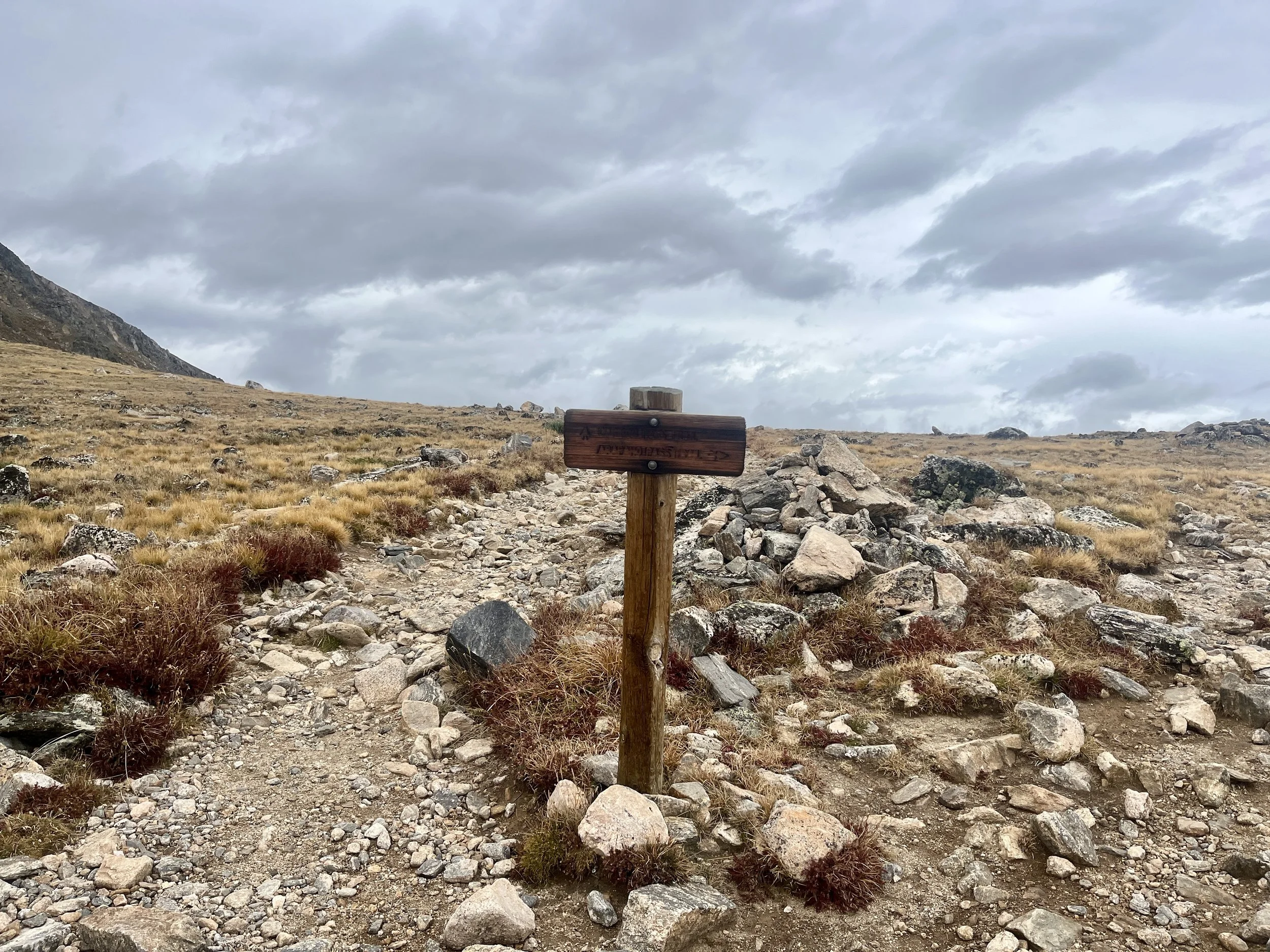

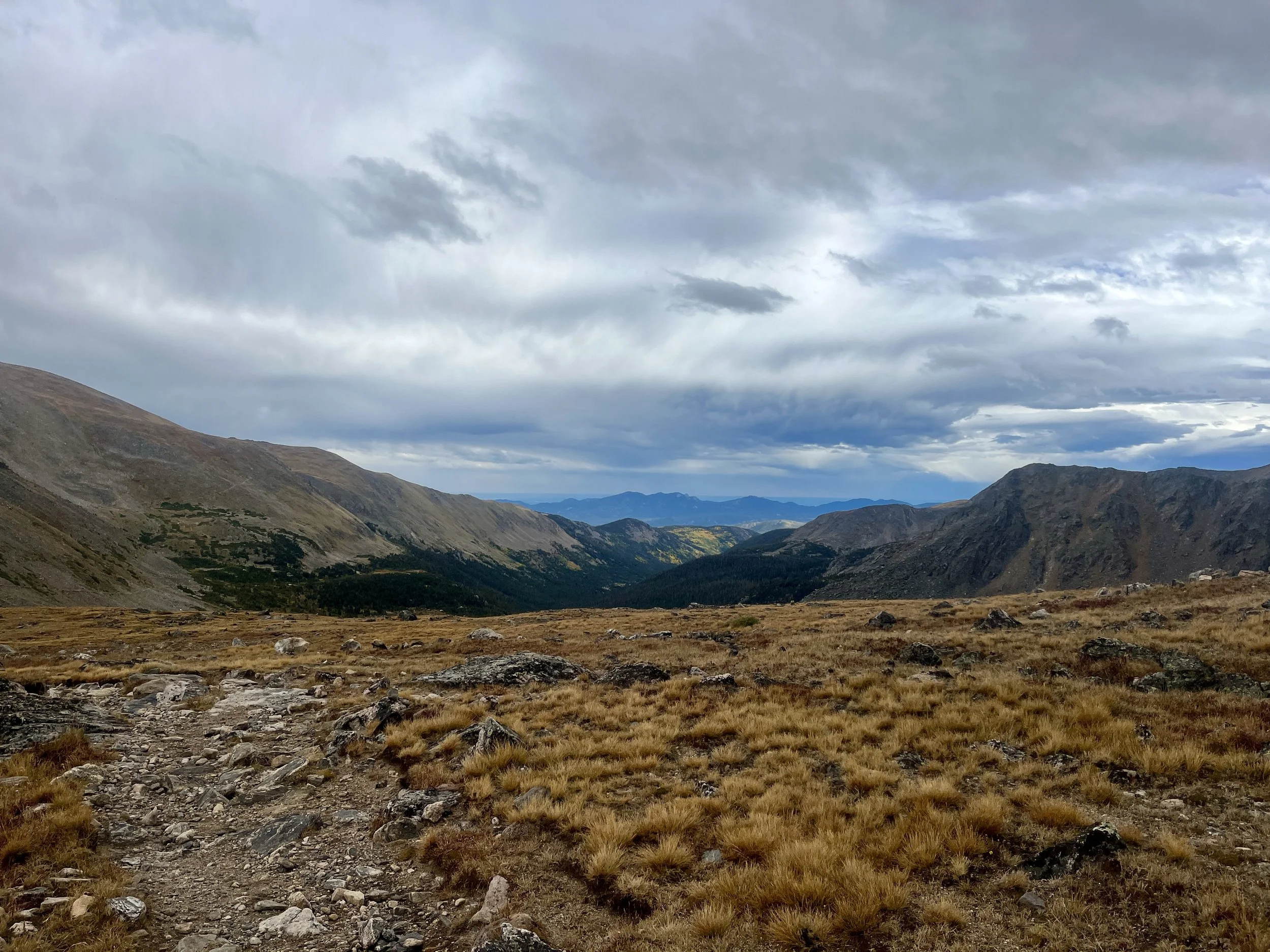


Hiking and Climbing Tip and Tricks
Some basic things to know and thing about for your next adventure
These are the real basic things to know to keep your experience enjoyable. Like my diet tips and tricks, this is also a living document that will be updated from time to time.
My first ever real backpacking type trip was in Patagonia. A 7-day trek around Torres del Paine National Park. We had two amazing guides, as well as a handful of porters (yes this was a very bougie experience) who taught us so much. I’m remain so grateful to this day that we ended up in their care.
That one trip set me on a path to exploring the outdoors, and since 2019 I’ve been to over 20 national parks in the U.S., as well as a number of other parks and mountains around the world. Every time I’ve gone out into the wilderness I’ve learned something new. That is particularly true of experiences with guides. They are guides for a reason and they know how to make your time outside as enjoyable as possible.
These are the tips and tricks that I’ve picked up, and have stuck with me. Many time I run through this checklist in my head before, and during any hikes, trail runs, climbs, or camping trips. For sure there are more complicated things to know depending on what you’re doing. But these basic guidelines to follow will help make your time a little bit better.
When you begin your hike, always start out a little cold. Once you start moving you’ll be surprised how fast you warm up. Especially if you’re starting with elevation gain. Start cool. Put your hands in your pockets. You can stop do add a layer if you need it.
When you get to the summit, a peak, or a nice place for a snack, zipper up and/or layer up before doing anything else. Peeing, eating, drinking, should all come second. You’ll be surprised how fast your body cools.
Don’t fall. The first thing we learned during our crampon training before climbing Mt. Rainier was “don’t fall.” So simple and stupid but so effective. During the whole descent of that mountain (which was around 6-7 hours if I recall), when my legs were jello and my feet were throbbing with blisters, all I repeated over and over to myself was “don’t fall.” And somehow that little phrase carried me all the way down that mountain. And I shit you not, on the few instances when I lost focus of my phrase, and engaged in conversation, or allowed my gaze to wander, were all the times I almost fell. Don’t. Fall.
You can radically change temperature by zipping up or down your clothes. Before taking a layer off, or putting a layer on, adjust the zipper on your jacket or quarter zip. Open or close the zippers in rain jacket arm pits. Take your hat off. Sometimes a simple change like that is all you need, and you’ll save yourself from having to make another stop.
Carry nutrient dense food, and food you like. Sweet and savory trail mix is a favorite for obvious reasons. For one two night trip we packed pizza for the first night. It was fantastic. The longer the trip, the more variation you’re going to want. Try to balance flavor and texture, with being practical (you can’t pack the whole kitchen).
There is no such thing as bad weather. Only wrong gear.
Which leads to 7. Have the right gear. My standard hiking gear is as follows:
Sturdy footwear
Quick dry socks
Quick dry t-shirt
Quick dry baselayer
A hat (baseball or winter hat)
Down vest (depending on temperature I’ll either start with this on, or stuff it in my pack)
Down jacket (in my pack weather permitting)
Rain jacket (in my pack weather permitting)
Gloves (light or heavy depending on weather, in my back)