
Five Articles Worth Reading This Week
Click here: OneSource Health, March 10, 2024
“The single biggest problem with communication is the illusion it has taken place.”
Five Articles to Consider This Week
I think the single biggest struggle we face when trying to do something to better ourselves like exercise and clean up our diet is the idea that in doing so, we’re giving something up. When we choose to exercise, we’re giving up time to decompress after a long day of work. When we choose to clean up our diet we’re missing out on that tasty cheeseburger and fries. When we choose to get adequate amounts of sleep, we experience FOMO thinking about all the fun that everyone else is having.
But we never give enough credit to how much we are gaining from those actions. This is in part because we live in a society based on consumption. It is the job of major corporations to make us feel like we’re missing out if we’re not participating because that’s what keeps their pockets fat and happy. But as the articles below make abundantly clear, there is plenty to gain from avoiding what corporate has to offer.
Parkinson’s and Exercise
Add Parkinson’s to the list of diseases that exercise has been shown to improve. Parkinson’s is a progressive neurodegenerative disease that effects dopamine producing neurons in the brain which impacts both motor and non-motor skills, and mood. Historically treatments for Parkinson’s have focused on dopamine supplementation which only masks the symptoms and is not a sustainable solution long term. Exercise, by contrast, has been shown to not only slow the deterioration of the dopamine neurons but even to reverse it in some cases. The type of exercise required is moderate-high intensity aerobic exercise, like HIIT, performed 3 or more times per week. Weight training may also have benefits, but it has not been studied.
Why it matters: Exercise is the one supplement that has been shown to improve nearly every disease across the board. Adding a degenerative and debilitating disease such as Parkinson’s to the list is further evidence of just how powerful exercise can be. If it can help treat Parkinson’s, what can it do for a healthy brain and body?
Read here: Aerobic exercise for Parkinson’s disease
Read here: Yale study shows HIIT can reverse nerve damage caused by Parkinson’s
9 charts that show US factory farming is even bigger than you realize
Factory farms, not farming, is contaminating the water we drink, polluting the air we breathe and causing an increased rate of climate change, as well as causing the inhumane treatment of billions of animals each year. Like so many other industries in recent years (i.e. healthcare, retail, housing, banking), large scale factory farms have benefited from consolidation, absorbing there would be competitors into their business, and concentrating too much of where our food comes from into the hands of a few. A few key takeaways:
¾ of chickens raised for meat live on farms that house 500,000 or more chickens.
Egg producers are sometimes housed with millions of other hens in one place, increasing the likelihood of disease and making the transmission of bird flu even more likely.
2/3 of dairy cows live on farms with 100,000 or more cows.
1/3 of U.S. River miles have been contaminated by farm run off consisting of waste from high concentrations of animal manure.
40 percent of corn grown in the U.S. is used for ethanol (it takes 100 acres of corn to produce the same amount of energy as 1 acre of solar).
Why it matters: Relying on a shrinking number of growing farms to supply our food means, in addition to the harm to the planet and animals it causes, our food system is losing it’s resilience. During times of disaster (i.e. COVID) or disease (i.e. bird flu) the potential for our food supply to be disrupted is greatly increased. Small local farmers by contrast offer sustainability across communities.
Read here: 9 charts that show US factory farming is even bigger than you realize
The Science Behind Ozempic Was Wrong
It turns out that they don’t know how the new class of weight-loss drugs that millions of people are taking actually works. They just know that they do. Initially they thought the drug reduced appetite by mimicking the GLP-1 hormone produced naturally in your gut. It’s now believed that the high concentrations and extended half-life (how long it takes for the hormone to be absorbed by your body) of the manufactured GLP-1 drug allows it to cross the blood brain barrier and penetrate deep into the brain.
Here’ a direct quote from the article that should make you feel better: “The latest drugs succeeded not because we fully understood the hormone, they’re based on but because we got lucky. And drug development, for all the careful research required, does sometimes come down to luck.”
Why it matters: It’s just the latest example of pharmaceutical companies chasing profits over safe treatments. The expected utilization of Ozempic and Wegovy has been enough to make Novo Nordisk, the company that manufactures both drugs, more valuable than the country, Denmark, it’s based out of. It makes you wonder what all those clinical trials are for.
Read here: The Science Behind Ozempic Was Wrong
CEO of Kellogg’s Say Eat Cereal For Dinner
The CEO of Kellogg’s took to TV this past week to tell Americans, particularly those struggling to put food on their tables, that they should eat cereal for dinner. The backlash was quick as many people pointed out that it’s very unlikely that the CEO making close to $5 mln per year is feeding his children cereal for dinner. He of course also missed the fact that cereal (as the next article points out) is not food.
Why it matters: This is the second time I’ve read about the CEO of a major food corporation telling people to eat processed foods. It continues to amaze me how people in positions of power are allowed to lie and omit facts on TV or in print without any real repercussions. The idea that while 44 million Americans face food insecurity, and millions more face nutrition insecurity, the CEO of Kellogg would make a statement such as this one tells you where we are in society.
Read here: Kellogg CEO under fire for suggesting cereal as a money-saving dinner
Read here: Let them eat Flakes: Kellogg’s CEO says poor families should consider ‘cereal for dinner’
Ultra-Processed Foods Linked to 32 Health Problems
An umbrella review of 45 distinct pooled meta-analysis that included 10 million people concluded that consumption of ultra-processed foods (UPFs) increases the risk of death and disease. The studies included the impact of increased exposure to UPFs such as cereal, ready to eat meals, protein bars, and soda. Heart disease, cancer, metabolic disease, respiratory illness, obesity, and diabetes were among the diseases with increased prevalence. Rates of anxiety and depression also increased dramatically. The researchers concluded “It is now time for UN agencies, with member states, to develop and implement a framework convention on ultra-processed foods analogous to the framework on tobacco.”
Why it matters: We’ve been told for too long that ‘calories in and calories’ out is all that matters. This review proves that the type of calorie is key. Ultra-processed foods are stripped of their nutrients and fiber and contain toxic ingredients that are banned in other countries. Up until now this has mostly been ignored by the “experts.” Perhaps now they will take it seriously and work to introduce legislation to make the food we eat be more like food.
Read here: Ultra-processed food linked to 32 harmful effects to health, review finds
Cheers to your practice.
James.
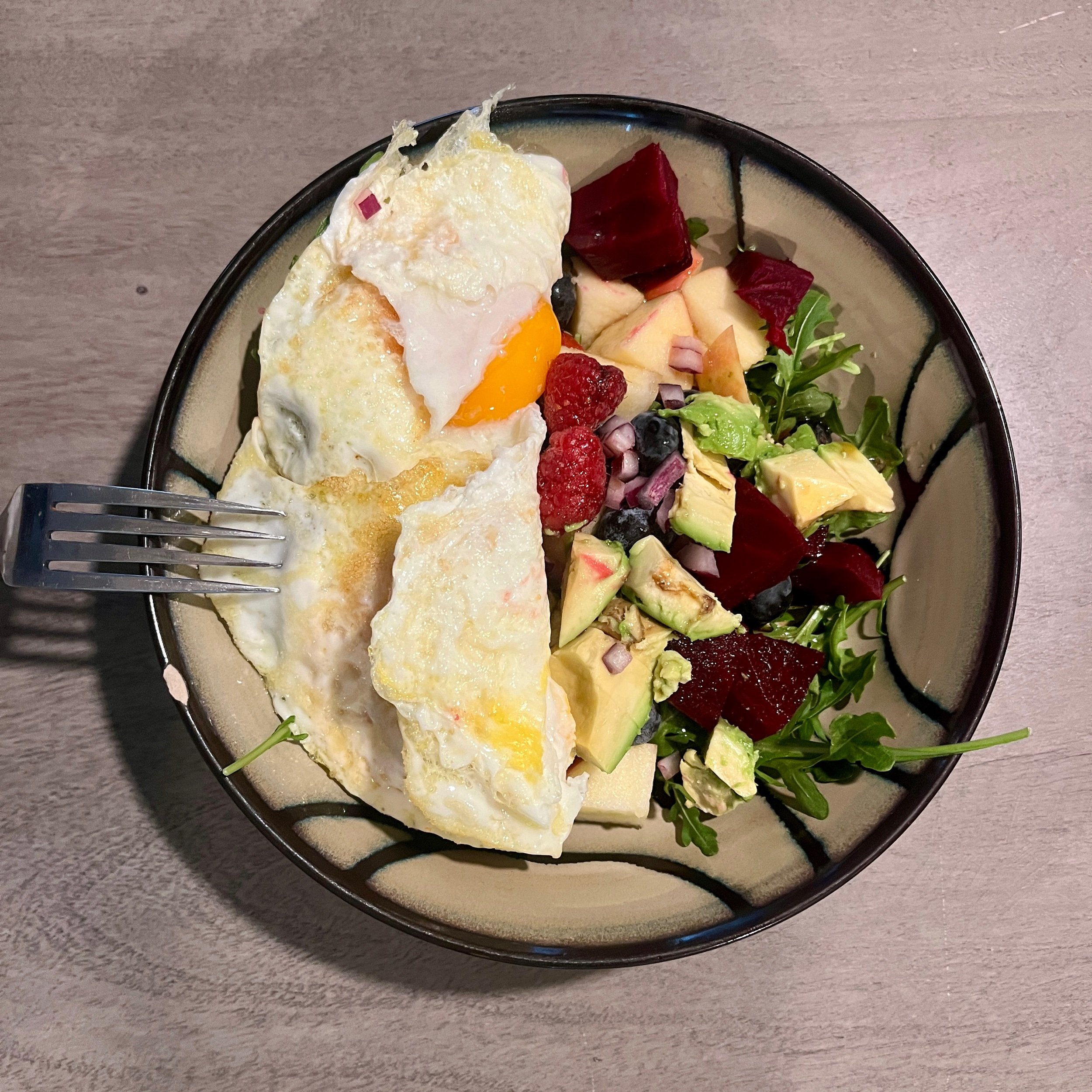
Meals & Recipes: Egg & Fruit Salad
Over easy egg salad, fruits and veggies!

I love throwing a couple of runny eggs on top of a salad. The yolk makes the whole dish so creamy. Check out this salad for a light meal.
Assemble the salad:
1 handful of wild arugula
1 handful of blueberries
1 handful of raspberries
1/3 sliced avocado
1 chopped beet
Chopped raw red onion
2 eggs over easy (leave the yolk runny to help dress the salad)
Dressing, in a small dish mix:
1 tbsp olive oil
1/2 tbsp fig balsamic vinegar
1/2 tbsp red wine vinegar
1 pinch of sea salt
Dash of garlic powder
Mix well and then drizzle over your bowl before adding the egg. Break the egg yolk and mix to enjoy!
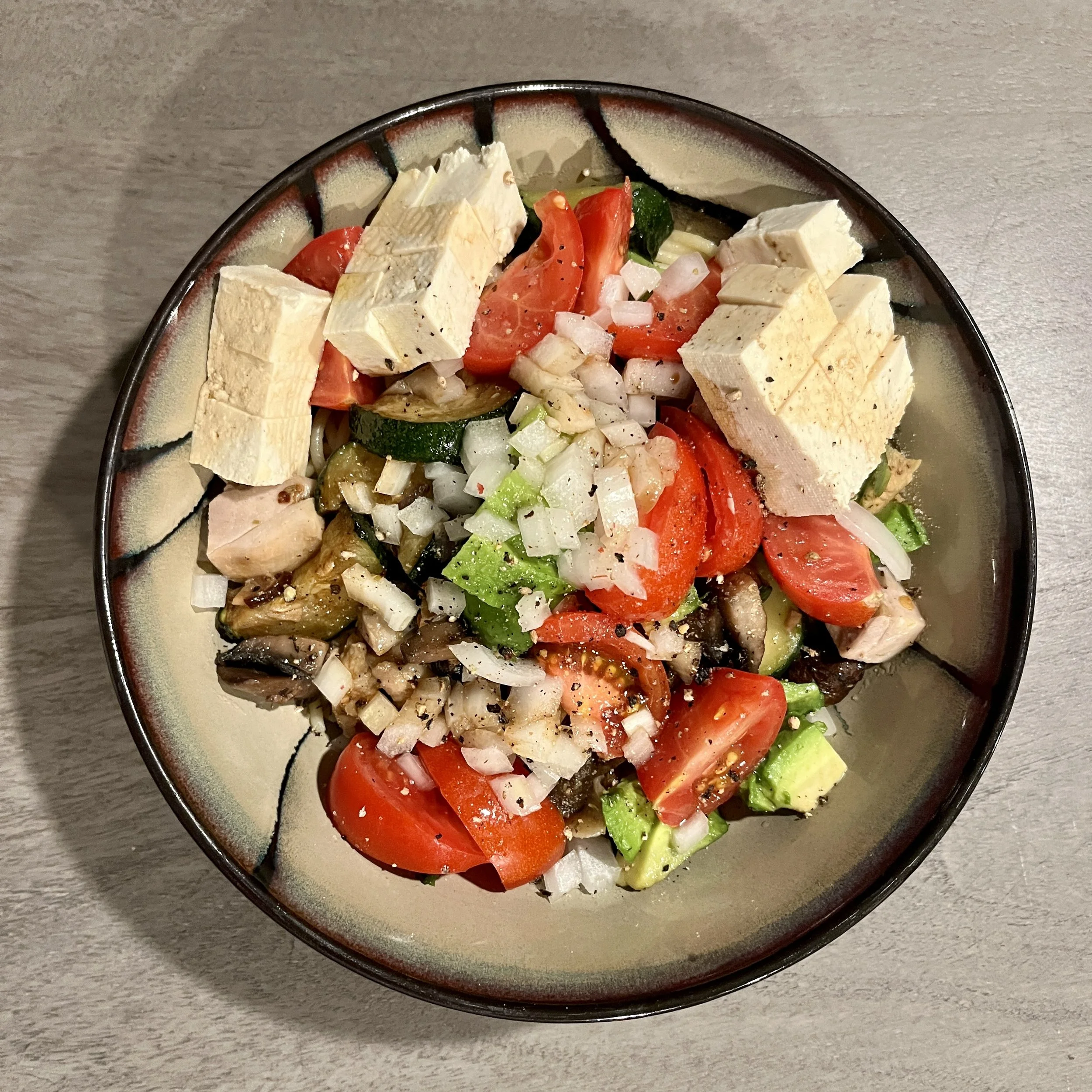
Dinner: Veggie Covered Spaghetti
Pasta, chicken thigh, zucchini, mushroom, tomato, avocado, onion, and tofu.

Pasta, chicken thigh, zucchini, mushroom, tomato, avocado, onion, and tofu.
This is an admittedly glutaneous dish. By the time I ate dinner it had been hours and I had only eaten breakfast. So I tried to make up for lost time with this enormous bowl of food! Enjoy.
Your Bowl. Add a handful of spaghetti, 1 chicken thigh chopped into bite size pieces, 1 handful of zucchini, 1 handful of mushrooms, 1 small sliced tomato, 1/4 sliced avocado, 1 slice chopped onion, 1 slice of tofu chopped into cubes. Top the tofu with soy sauce. Coat the rest of the dish with red wine vinegar, fig balsamic vinegar, 2 tbsp of olive oil, 2 - 3 pinches of sea salt and fresh cracked pepper!
Burying the pasta forces you to eat the vegetables (fiber) and chicken (protein) first which helps to slow the digestion of the processed carbohydrates from the pasta.
Buon Appetito!
Cooking Instructions:
Spaghetti. Follow instructions on your package. We used Rao’s. A good choice because it only contains two ingredients: durum semolina flour and water. Bring a pot of water to boil. Add the pasta. Cook time is 11 minutes if choosing Rao’s pasta. Strain. Pour back into the pot and add 1 - 2 tbsp of olive oil (to prevent pasta from sticking), 1 - 2 pinches of salt and stir.
Chicken Thighs. Use organic free range chicken thighs (pasture raised is best if you can get it). Preheat the oven to 425. Put the chicken thighs into a Pyrex. Coat them lightly in enough olive oil so they don’t stick to the dish. Add a pinch of salt to each one (each side), black pepper, onion powder, garlic powder and a touch of cayenne pepper. Add a little water to the dish. Leave them right side up. Cook at 425 for 20 minutes.
Zucchini. Bring a pan to medium heat. Chop one slice of yellow onion and two cloves of garlic. Add to the pan with 1/2 tbsp of olive oil and two pinches of salt. Chop a zucchini in half down the middle. Then chop the halves in half length wise. Then cut into bite size (1 inch) pieces. Toss in a bowl with 1 tbsp olive oil and two pinches of salt. Once the garlic and onion are fragrant, add the zucchini to the pan. Add a splash of water and cover. Let cook for 3-5 minutes. Uncover and flip, then cover again and let cook for an additional 3-5 minutes (until done).
Mushrooms. We like organic baby bellas. Bring a pan to medium-high heat. Add a tbsp of olive oil. Slice the mushrooms into quarters, toss lightly with olive oil (1 - 2 tbsp) and salt (2 - 3 pinches, and add them to the preheated pan. Add a few splashes of water and cover. Leave undisturbed for 5 minutes, then toss and let sit for another 3 - 5 minutes.
Meat Raised Right, and Finding Excuses to Exercise
Click here: OneSource Health, March 3, 2024
“When motivation fails you, discipline and routine will save you.”
Tim Kennedy
Sisu Farms Show and Tell
For the past few weeks, I’ve been ordering chicken and eggs from Sisu Farms. They’re a local farm located about 2 hours outside of Denver run by a native Colorado family. I found them on eatwild.com. All their meat is pasture raised and fed only organic non-GMO grains. Pictured above are 3 whole chickens, a dozen eggs, and a package of bacon (it was on sale and I couldn’t resist). My largest order to date.
The chicken is more expensive than what you’d get in the store, but that’s because they’re two different chickens. An industrial raised chicken might be as cheap as $3.50 per lb, while an industrial raised organic chicken will be closer to $5 per lb. Pasture raised organic chickens, like the ones shown here from Sisu Farms, are closer to $9 per lb or more. Yes, almost double the price.
So, what’s the difference?
Industrial raised chickens live their entire lives indoors, never seeing sunlight or feeling a breeze. They’re fed cheap commodity grains grown with pesticides, herbicides, and fungicides. Their feed is laced with antibiotics meant to ward off infections caused by weak immune systems from the inhumane way they’re forced to live. Antibiotics also accelerate their growth to otherwise abnormal levels, making some chickens so heavy their legs can’t even support their weight. And with no room to move they’re forced to live “knee” deep in their own waste.
Industrial raised chickens
“Free range” chickens have access to the outdoors for 51 percent of their life, but that says nothing of how much time that they actually do spend outside the coop or what the quality of that outdoor environment is. “Cage free” hens can move “freely” within their hen house, assuming they have the space to do so amongst the thousands of other chickens. And an “organic” industrially raised chicken is given organic feed, but it’s typically of low quality and no variety.
Pigs being transported to slaughter
It’s for all these reasons that industrial farmers are able to produce birds, and other animals such as hogs and cattle, so cheaply. But this method of raising animals has other more costly downstream effects. Mainly to our health in the form of antibiotic resistant strains of infection and chronic diseases, and to the environment in the form of natural disasters such as wildfires, hurricanes, and rising water levels. The cost to remedy our health epidemic and the growing number of disasters is borne by us and is in the trillions of dollars. When you include those costs, it becomes clear what the cheaper option is.
In stark contrast to this method of farming lies Sisu Farms and a growing number of other farmers around the country who are raising their animals the right way. Sisu raises their chickens and hogs out on pasture, allowing them to exhibit natural instincts to peck, scratch, and root. Creating a healthier and more resilient animal.
The recent bird flu outbreak in 2022 in which over 50 million chickens, most of which were on large scale commercial farms, had to be slaughtered to try and contain the spread of the virus is the perfect example. The flu spread through these chickens like wildfire because of the artificial and inhumane way in which they were raised. As a result, the USDA had to reimburse farmers more than $140 million dollars for the lost fowl. Funded by taxpayers.
So, the question isn’t “why are pasture raised chickens so expensive,” its “why are commodity chickens so damn cheap!” And, moreover, “what is the true cost to society of raising chickens in an industrialized manner?”
I don’t like thinking I’m paying double for meat when I don’t have to, but it’s become abundantly clear to me that I have to. If I want to stay healthy, consume humanely raised animals, and contribute to healing the planet, then I don’t have a choice. I must be willing to put my dollars behind my beliefs.
One way I’ve tried to offset the cost is by buying and cooking whole chickens. Organic chicken ranges in price from $7 per lb for chicken thighs, up to $10 per lb for chicken breasts. So if you’re used to buying individual cuts, then you’re already paying close to the same price as you would for an organic pasture raised chicken. But with a whole chicken you’ll get more meat, tasty skin, a carcass for delicious bone broth, and organs (if you or your dog are into that).
For those of us with a choice it’s not a question but a matter of fact. Anyone that can afford to, must. And the more of us that do, the more accessible and affordable raising food the right way will become. Think of every dollar you spend as a vote. I’ve been using my dollars to vote for local food and businesses as much as I can, because it’s been my experience that those are the people that care.
Check out eatwild.com to find a farm that will deliver near you.
Science Says We Don’t Want to Exercise.
Two articles slid into my feed recently that piqued my interest. Both were detailing the science behind why we don’t want to exercise. The theory goes something like this. While humans developed a large capacity for physical activity, born out of our need to hunt and gather food, our brains also evolved to favor the conservation of energy.
From an evolutionary perspective this made sense. Save your energy (calories) for finding food and fighting off predators. But we no longer must search for food, and the only real predators we face are ourselves. Since food is easily accessible and abundant (for most) we no longer burn calories hunting and gathering, and we end up doing too much conserving.
According to the Centers for Disease Control and Prevention over 70 percent of people fail to get the recommended 150 minutes (about 20 minutes per day) of moderate-intensity aerobic exercise and two resistance training sessions per week prescribed by the U.S. Department of Health and Human Services. Various surveys suggest that the reasons why so many people are missing the mark isn’t exclusive to our evolutionary tendency towards rest.
At least 50 percent of people report having a chronic condition that prevents them from exercising. Others report lacking the confidence to step into a gym and workout. And for a lot of people, it’s simply a matter of avoiding what they view as an unpleasant and uncomfortable act with uncertain rewards.
I can’t disagree. I’ve been walking into gyms for over 20 years and despite what it seems, it never gets easier. The habit I’ve developed makes it harder to skip a day (see quote above), but it doesn’t make it easier. Most days I still dread walking through those gym doors or driving to a trailhead.
But one of the things that has kept me coming back is the feeling I always leave with. A sense of accomplishment and a clear mind. In all my years of exercise there’s never been a workout I’ve regretted. So, in order to stay consistent and keep those good feelings coming, I’ve developed a number of techniques and mental tricks to keep showing up.
Think About Your Ideal Self
Self-discrepancy theory describes three selves we all possess.
Actual self - your current state
Ideal self - what you want to be
Ought self - the self that does all the stuff required to become your ideal self
I wrote a post recently titled Who Are You Becoming? that speaks to this theory (although I hadn’t heard of it at the time). Essentially, think about the person you want to become and then match your daily actions to those that would be required to become that person. If you want to feel better and exercise, then talk to your ought self and get a workout in. We become our ideal self through the accumulation of small actions each day.
Think About the Reward
Both articles cite “uncertain rewards” as a reason people avoid working out. But I think it’s a misunderstanding of what rewards to expect. Physical rewards might take time to appear, but the mental benefits are always immediate as exercise is the most effective mood booster on the market, the result of a handful of hormones that are released when you exert yourself physically. In addition, a good workout serves as a distraction from stress and anxiety in your normal life, providing you with a muchneeded break and reset. So, think about what a good workout is going to do for your mood.
Break It Down
The hardest part of a workout is (like most of life) showing up for it. When we think about a workout, all we focus on is the 45 - 60 minutes of getting our ass kicked, ending up in a pool of our own sweat. Instead, focus on each step on the way to that workout. When I’m struggling to get out the door, I have a conversation with myself. “Well, just change into your gym clothes, then see how you feel. Ok good, now get your bag ready. Great. How about filling up your water.” I have this conversation to distract myself from the workout I’m dreading and to inch my way out the door.
Lie To Yourself And Commit To A Shorter Workout
This was particularly useful when I was training for triathlons. I would convince myself to get out for my run or bike sessions by lying. I’d commit to half the prescribed miles and then agree to reassess. Nine out of 10 times I’d complete the whole workout. It was just a matter of getting going.
Now that I’m strength training the conversation sounds different, but the intent is the same. Some days all I commit to is a stretch and foam roll session, or 20 minutes in the sauna, or 10 minutes on the treadmill. But once I’m in the gym and the blood starts pumping, I find the motivation to get my workout done.
Be Realistic About The Commitment
An hour at the gym, on your Peloton bike, or out hiking, sounds like a long and dreadful time! But it’s only one hour or 6 percent of your day. It’s one episode of your favorite show. It’s one meeting at work. It’s a chance to do something for yourself that will make you feel good the rest of the day.
Know That You’re Not Alone In Feeling Out Of Place
I’ve been working out in gyms for 20+ years, and I still feel uncomfortable whenever I’m in a new setting. It happened to me recently after moving to Colorado (read New Gym Jitters). So, know that you’re not alone. And while avid gym goers seem intimidating, I’m here to tell you that they are anything but. They are some of the nicest people I’ve ever met. Also, and this is important, most avid gym goers (me included) are too self-absorbed to care about what you’re doing.
Try Something New
After a few years of endurance racing, I’ve finally gotten back into strength training (my first love). But after a year of consistently hitting the weights, I’ve been feeling burnt out and lacking motivation. So this past week I tried something new. I took a movement class where we did things like bear crawl forwards, backwards, and sideways. We played a game of “catch,” and we practiced moves like cartwheels, the crab, and (my favorite) the slippery pickle. It was a blast and it provided enough of a shakeup in my routine to get me excited to exercise.
Physical Activity Doesn’t Have To Be Formal
Spend time in your garden if you have one. Spend time in the kitchen cooking, whether that’s big meal preps or preparing individual meals. Clean up and organize your house. Volunteer in your community. Anything to get moving.
The science says we don’t want to exercise but every study in the world comes to the same conclusion. That exercise is by and large the best way to improve your physical and mental health. We don’t have to forage for food anymore or hunt big game, what a relief. Instead use that energy to do something fun and active!
Cheers to your practice.
James.

How I Limit My Phone Usage
Putting down your phone is hard. But with these tactics it might be possible to at least limit it’s usage.
I, like most people, struggle with being on my phone too much, and I’m always looking for ways to limit my usage. We carry our phones everywhere, and even when we do decide to put them down, we’re inevitably prompted to pick them back up the second a new message, call, email, or social media notification comes through. Each time this happens, it brings us right back into the throws of phone addiction. Phones have eliminated boredom.
On average Americans check their phones anywhere from 150 to 350 times per day (depending on the survey). That equates to once every 5 - 10 minutes. There is nothing else in this world that garners that much attention from us. And when we touch our phones, we usually end up on it longer than we intended. We spend nearly 1/3 of our time awake, or 4 - 5 hours, each day staring at our phones.
What’s worse is what we do when we’re on them. Scrolling through social media, checking our email, shopping, and gaming are all top reasons people report using their phones for. The number one reason though is to call or text friends and family. And while keeping in touch feels like a legitimate reason to be on your phone, more and more research shows that always being connected is not a good thing. Always being connected negatively affects our mental health and well-being. Anxiety and rates of depression have soared since the advent of the smartphone.
But I think there is a stigma around trying to convince people to get off their phone. People feel, with good reason, that you’re trying to control their behavior and prevent them from doing something that they “enjoy.” But I think that thought process needs to be re-framed. It’s less about what’s being taken away and more about what’s being given back.
A smartphone is like a bag of M&M’s or a cylinder of Pringles (once you pop you can’t stop). The more junk processed food you consume the less likely you are to consume nutritious food that fuels your body. The same holds true with your phone. The more time you spend staring at social media, or scrolling through emails, or playing games, the less likely you are to immerse yourself in activities that are going to benefit your life. Most notably, thinking.
Thinking is a vital but lost art. We need time to think to figure out what we want from our day, our lives, our jobs, our relationships. And we need time to think to figure out how to make it all happen. But that’s almost impossible to do when you’re being distracted by your phone. It doesn’t matter if you’re “just responding to a friend” or watching a video. It is all pulling you away from deciding your goals, figuring out how to accomplish them, and executing.
Phones also rob you of being present and staying connected in the real world. Smartphones create a forcefield around you that blocks out your environment and the people in it. I’m sure you’ve experienced trying to talk to someone who is immersed in their phone only to get no response or a muted one. Or you’ve been walking across the street and realized you haven’t looked up to check for traffic (I know I have).
It’s for all these reasons that I’ve worked hard over the last few years to limit my phone usage. For me it’s simple. When I limit time on my phone, I’m more productive, happier, and my day goes my smoother. In addition, when I do finally pick my phone up, I’m excited to respond to whatever communications I missed.
But putting down your phone is not easy (they are in fact designed to be addictive in the same way a slot machine is), and it doesn’t come down to willpower. Like so many things, diet being a good example, your ability to succeed in limiting your phone comes down to setting up strict parameters, and then following them as closely as possible. In the same way that it’s a lot easier to not snack on Pringles or M&M’s if they aren’t in your pantry, giving yourself reasons to avoid your phone will make it harder to pick up and easier to put down.
Recognizing all of this, I’ve setup several informal rules that I try to comply with every day. I’m not 100 compliant, but these rules have helped me to separate myself from my phone and be more productive when I do pick it up. After all, a smartphone is a wonderful piece of technology if used for good.
Here are my rules and the tactics that I try to follow to make my days better and more productive.
No phones while eating. When I use my phone during a meal it takes away from my enjoyment of eating, and the person(s) I’m eating with. If I’m alone, I’ll either write (pen and paper) or read whatever is around. Recently I’ve been studying a postcard of Native Indian Tribe names we picked up on a road trip. It’s light enough to still let my mind wander, while keeping me from feeling completely bored. Reading nutrition labels is another fun past-time of mine.
Unsubscribe from emails that are no longer serving me. If I head for the delete button before the read button, then I need to unsubscribe. Marketing/spam emails are the obvious culprits, but I also regularly unsubscribe from emails I willingly signed up for. Sometimes they aren’t what I was expecting, or I’ve grown tired of the content. If I regain interest for some reason I can always resubscribe. But strict adherence to this rule saves me a lot of otherwise wasted time.
During the day my phone stays on vibrate. At night I put it on do not disturb and airplane mode. I don’t want to be woken up by my phone, and I don’t the first thing I see when I wake up to be unread messages. All too often those texts contain something that will ruin my morning. I check my phone after my morning routine is complete.
When I put my phone down, I lay it face down. If a notification does come through, I’m not tempted by the brightly lit LED screen to pick it up.
I intentionally leave my phone behind. In the car when I’m at the park with my dog (don’t rob me). At home when I go out to dinner. In my locker when I’m in the sauna. I do it because otherwise I’d be tempted to pick it up.
“I wanted to stop being on top of things, and start getting to the bottom of things.” This is a great quote I heard recently, and I think applies perfectly to social media usage. We think we’re staying on top of things but really, we’re getting nowhere. By deleting my Twitter and FaceBook, and no longer using Instagram, I’ve reduced the reasons to pick my phone up, and made more time to dive into things that actually interest me. I’ve also eliminated social media induced anxiety from my life.
Remember, not every message needs an immediate response. Not immediately acknowledging a message, email, or phone call is not the same as ignoring someone. Most times these actions are actually interrupting me and what I’m doing, which causes me to be distracted, lose focus, and lose productivity. So instead of answering right away, I finish my task, whether that’s folding laundry or reading a chapter, and then answer.
Re-direct why I picked my phone up. When the above fails and I pick up my phone and go to do something “unproductive” (i.e. refresh my email, check the stock market), I give myself a choice. Put the phone down or do something productive (i.e. read that newsletter or article you’ve been putting off). In this way I can at least make the most of my time.
It’s possible to limit your screen time. Try some of these tactics the next time you’re trying to manage your phone usage and let me know if they work for you.
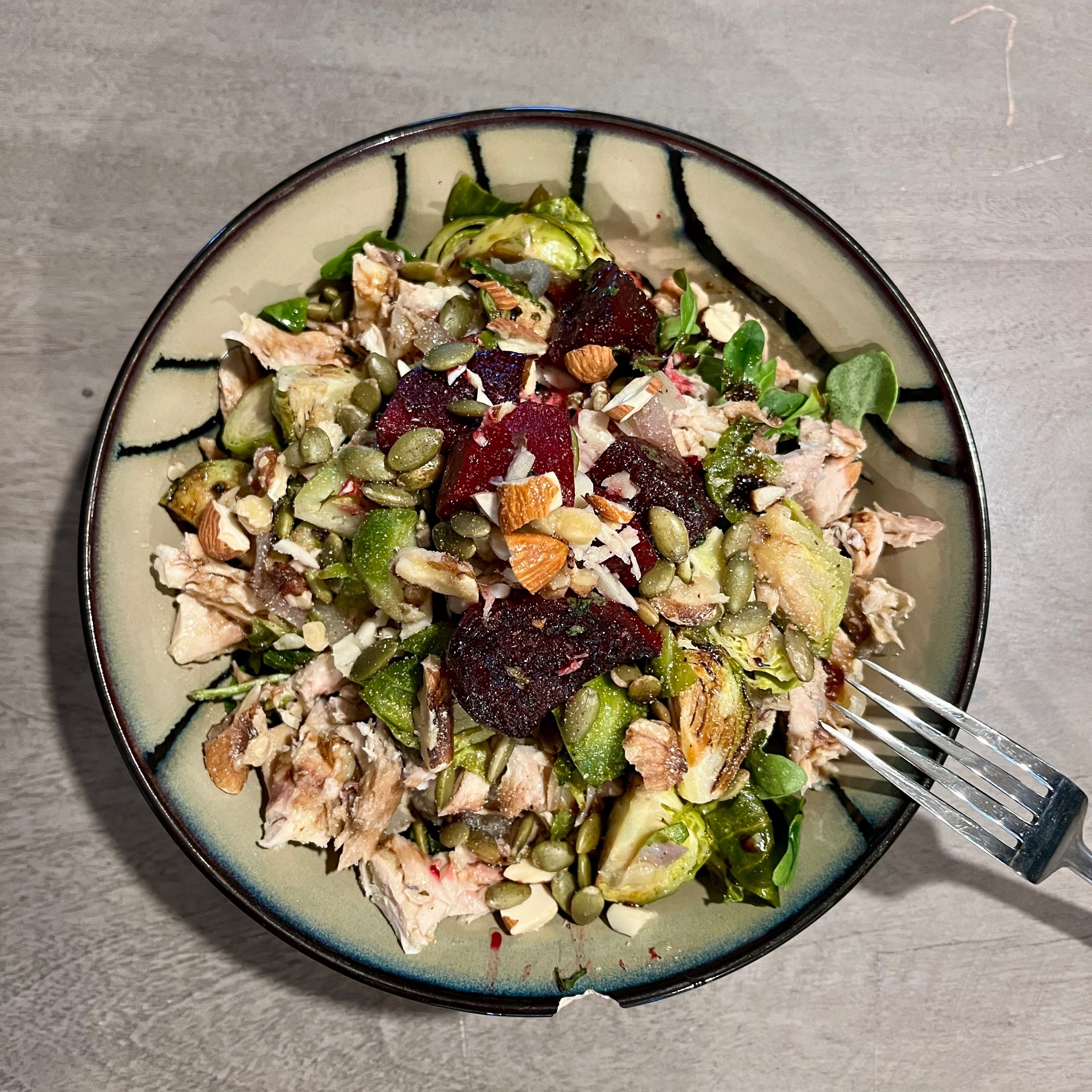
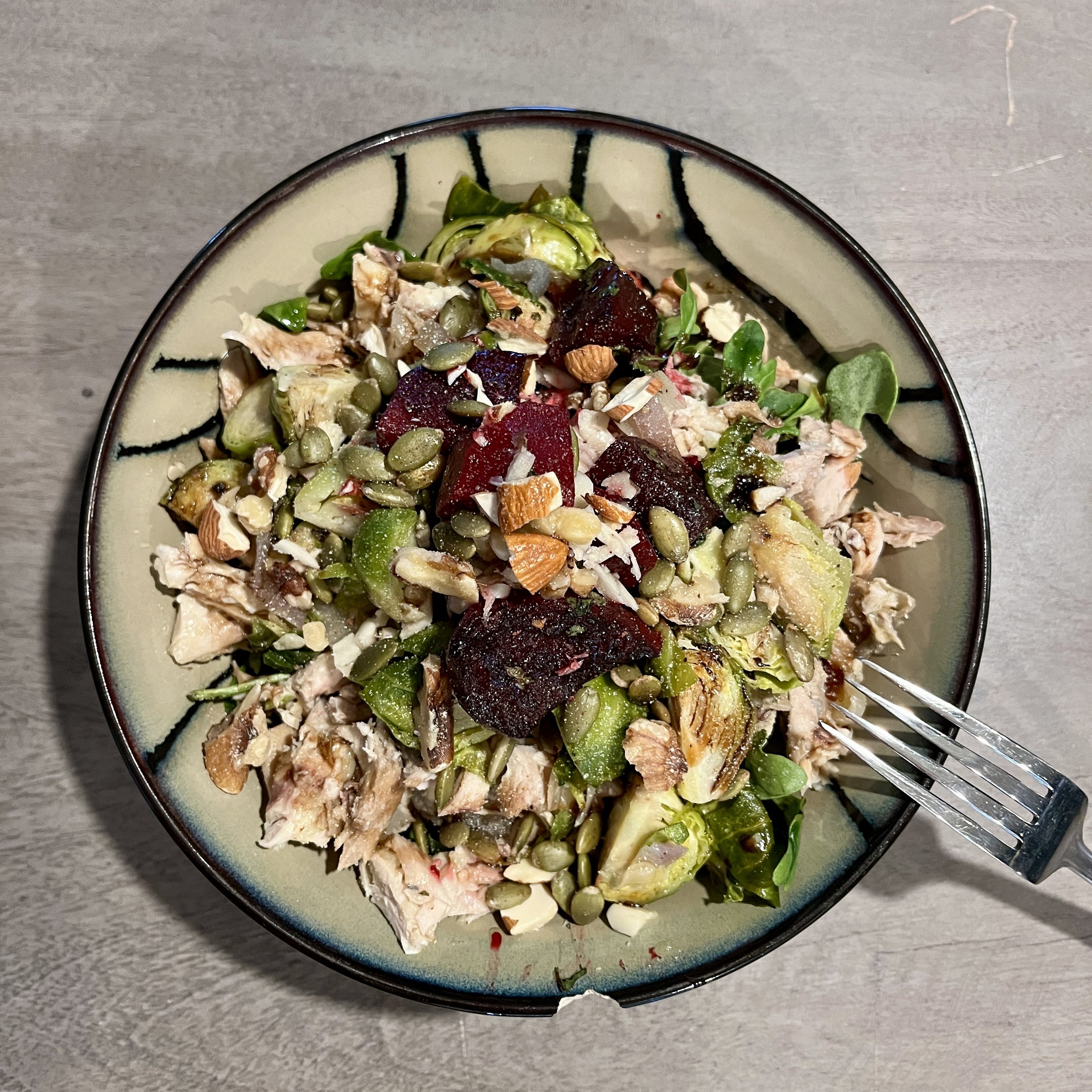
Lunch: Chicken, beet, and brussels salad
A big lunch to replenish after the gym
After discovering how easy and delicious it is to cook with the crock pot (check out this crock pot chicken recipe) we’ve been looking for more ways to use it. This morning Jennifer thought “why not cook the beets in it.”
So that’s what we did. She found this simple recipe. I only had 4 beets so I pared the amounts down a bit. I also think I cut the beets smaller than I was supposed to, so I cooked them on low for a little over 4 hours instead of 6. But they came out sooo good.
They finished cooking right when I got back from the gym, so I tossed them with some dry parsley and then made this bomb salad with them. Check it out.
1.5 handfuls of chicken
1 handful of roasted brussels
1 handful of crock pot beets
Chopped walnuts and almonds, and a dash of pumpkin seeds
Finished with olive oil, fig balsamic, red wine vinegar, chopped raw garlic, salt, onion powder
Such a treat!


Final Sleep Insights, and Food Waste Fights Food Insecurity
Click here: OneSource Health, February 25, 2024
“My mind is made up, don’t confuse me with the facts.”
Why We Sleep
Closing The Book on Sleep
I finally finished Why We Sleep by Matthew Walker, Ph.D. The moral of the story, once you understand the power of sleep it is both terrifying and empowering. Terrifying because poor sleep quality or quantity is linked to chronic illnesses such as heart disease, cancer, diabetes, and stroke, to loss of memory, dementia, and Alzheimer’s, to low testosterone, and low libido, to a decreased ability to learn and an increased chance of accidents such as car crashes. But it’s empowering because what sleep taketh sleep also giveth.
Every one of the conditions mentioned above also improves with better sleep. Making sleep the most powerful, accessible, and affordable supplement available. And the most underutilized. Surveys show that 25 percent of adults get less than 6 hours of sleep, the CDC’s recommended dose is 7 hours, each night, leading to chronic sleep deprivation. In 1942 that number was less than 8 percent.
One of the biggest side effects of sleep deprivation or “short sleep,” as he calls it, is the impact on the hormones leptin, which regulates satiety, and ghrelin, which controls hunger. Inadequate sleep decreases leptin and increases ghrelin, lowering your levels of satiety and keeping you hungry for more food. Studies have shown that sleep deprived individuals consume 300 calories more per day compared to their well-rested counterparts. Extrapolate that over the roughly 250-day work year and that’s an extra 78,000 calories (20 pounds).
In addition, poor sleep inhibits your body’s ability to regulate blood glucose by as much as 40 percent. Worse still, being sleep deprived increases cravings for carbohydrate and sugar rich foods by 30 to 40 percent. A decreased ability to regulate glucose is something that I experienced during my glucose monitor experiment. I was getting less than 6 hours of sleep per night at the time and foods like lentils and blueberries that should’ve had little to no affect were causing major spikes.
The combination of an increased appetite and an inability to regulate glucose is one of the reasons for the increased prevalence of obesity and diabetes in society. These two diseases, which could in part be prevented or managed through better sleep, have instead resulted in a new multi-billion-dollar industry for drugs that manage appetite in much of the same way as leptin and ghrelin do. The problem is that like nutrition, most physicians receive very little sleep training in medical school, making it easier for doctors to fill a prescription than advise on sleep.
A few weeks ago, I went to the doctor for my annual physical. I told my physician about symptoms of chest pain I was having, and how my family history of heart disease had me concerned. He asked several questions aimed at soothing my fears and ruling out cardiac disease. He also did an electrocardiography (EKG) and blood work to check my cholesterol levels. But he never asked about stress or sleep. In the end he told me with 99 percent certainty that the pain was not heart related and I didn’t have to worry.
The pain has since gone away, so perhaps he wasn’t wrong, but in retrospect I have no doubt that stress and even more so a lack of sleep was linked to the discomfort I was feeling. At the time I was spending 5 - 6 hours in bed, which equates to ~4 - 5 hours of actual sleep. In addition, my total cholesterol levels, although not in the danger zone, had increased substantially since my last blood test. A decreased ability to regulate cholesterol is another side effect of insufficient sleep.
My doctor is a young guy in the first few years of practicing who I really like. But it’s clear to me that the science of sleep has yet to make it into medical school curriculums.
But getting adequate amounts of sleep is about more than just warding off disease and weight gain. Sleep also plays a major role in our ability to perform mentally and physically. When participants in a study were tested on specific motor skills, those who got the proper dose of sleep performed 20 percent better in speed and 25 percent better in accuracy. A separate study showed that obtaining less than 6 hours of sleep per night decreased the time to physical exhaustion by 10 - 30 percent.
The good news is that for most people poor sleep is a result of poor sleep hygiene and can be improved. The National Institutes of Health suggests following these 12 steps to better sleep (page 22). And if you think you have a sleep disorder then Matthew Walker recommends seeking out help from the National Sleep Foundation.
For me, Why We Sleep has forced me to take a hard look at my sleep practices and to make a few big changes.
Keeping a steady bedtime. When I’m tired, I call it a night. I no longer fight my fatigue in favor of one more episode of The Great British Baking Show. I don’t care how good the pastries look!
Staying in bed longer. I’ve always been a proud early riser. But by jumping out of bed too early I’ve been missing the memory boosting benefits offered by those last two hours of sleep.
Reducing caffeine. From 3 cups of coffee (300 mg of caffeine) to 1 cup of green tea (50 mg of caffeine). Since making this change, I’ve been dreaming nonstop, fall asleep easier, and sleep deeper and longer.
Napping more. Day time naps as short as 20 minutes have shown improvement in memory consolidation and just as important, I always feel better after.
Drowning out noise. I’ve been wearing ear plugs most nights and putting on a sound machine to silence any unwanted noise.
I’m also continuing other practices I instituted years ago.
Turing down the lights after dinner to begin the wind down process. Artificial light (including screens) delays the release of melatonin.
Keeping the room cool. Your body temperature needs to drop by 1 - 2 degrees Fahrenheit to fall asleep and stay asleep.
Eating an early dinner. The system that helps you fall asleep is the same one that regulates digestion. You don’t want them competing.
Drinking 1 tsp of CALM 30 - 60 minutes before bed in 3 - 4 oz of water. Too much water will have me up peeing.
Stretching my legs for 5 minutes before bed. Quad stretch. Calf stretch. Hamstring stretch. Elevated pigeon on the bed.
Avoiding alcohol. Alcohol and caffeine are two of the most common sleep disruptors in society. Thankfully I gave up drinking in 2021.
The information provided here and in previous newsletters is just a snippet of the information offered throughout the book. I strongly encourage anyone who is interested in learning more to pick up the book or an audio version. It’ll be one of the best investments that you’ll ever make.
Photo by Joshua Hoehne on Unsplash
Fill Stomachs Not Landfills
On Friday Jen and I volunteered with We Don’t Waste. They’re a Denver based non-profit that works with local restaurants, bakeries, and grocery stores to recover food that would’ve otherwise gone to waste. Their motto is fill stomachs not landfills.
Every year an estimated 40 percent of food equal to 80 million tons or 149 billion meals in our country goes to waste. Food waste takes many forms and includes uneaten food at home, stores and restaurants, crops left in the field by farmers, surplus food ordered for schools, and food that’s rejected by retailers for not meeting certain standards of appearance, shape, or color.
The wasted food very often ends up in landfills where it decomposes and emits methane gas, a greenhouse gas that traps 80 times more heat than carbon dioxide over a 20 year period, and 28 times more over a 100 year period.
Instead of feeding climate change, that food could be going to feed the nearly 44 million people who suffered from food insecurity in 2023, and the far greater number of people who are suffering from nutrition insecurity. And that’s exactly what We Don’t Waste is doing.
By rescuing perfectly good food destined for landfills and distributing them to people in need at their 8 monthly food markets, they’re reducing methane gas emissions and the number of people going hungry.
In under 2 hours on Friday, we served over 350 families. Unlike other food programs, there are no eligibility qualifications to shop the market. All you must do is show up. We Don’t Waste designs their events similar to a farmer’s market, where people can walk through, shop (for free), and not feel stigmatized.
Shoppers pick out the items that they want, and leave what they don’t. On Friday the list of food included: chicken, bacon, ribs, yogurt, chocolate milk, onions, broccoli, micro greens, leeks, peanut butter, and more.
Of the 350 families who shopped the market I estimate that 90 percent of them were migrants of Latin American descent. Most of them spoke little or no English. It had me thinking about how different the environment they fled from was compared to the one they arrived in. Where in America we have enough wasted food to serve thousands of families each week.
The privilege we experience in this country to walk into a fully stocked supermarket every single day couldn’t be more foreign to them.
We’ve also been doing volunteer work with Food Bank of the Rockies. A slightly different program. While some of the food we distribute is rescued, a lot of it is donated or funded by the government. The Emergency Food Assistance Program (TEFAP), a federal program that helps supplement the diets of people with low income by providing them with food at no cost, is of particular importance as it typically makes up about half of the food we hand out.
In contrast to the people served at We Don’t Waste, the people who show up for the food bank are more typically struggling American citizens. There is no one demographic that dominates.
On average we distribute close to 100 boxes of food in just over an hour. But like We Don’t Waste, the food available varies by week. This past week included fresh pears, oranges, and broccoli, as well as frozen ground beef, wild caught sockeye salmon, and chicken sausage. Shelf stable items included walnuts, raisins, cereal, and ramen. There were even items such as coffee creamer, and cream top whole milk.
Regardless of the differences between where the food comes from and who’s showing up to receive it, one thing is clear. That more and more people in this country are struggling to put healthy, nutritious food on their tables. And that’s what makes organizations and programs such as these so valuable.
Food should be a basic human right. Especially in a country filled with such abundance. Being out on the streets viewing it firsthand always provides a fresh perspective of the issue. It’s one thing to hear the statistics or to observe people’s troubles as you walk or drive by, but it is quite another to stand in front of them and make a connection through food.
So many people are living just on the fringe. And without programs like TEFAP and the Supplemental Nutrition Assistance Program (SNAP), and organizations like local Food Banks and We Don’t Waste, these same people would be missing important meals. They need our help and government funding.
There’s a way to join in without leaving your screen. Click this link and Tell Congress to help end hunger in rural communities by strengthening TEFAP in the next farm bill! Our tax money should be spent on the all the people right here at home.
Cheers.
James.

An Ode To Dense Books
The benefits of dense books are great for those who choose to take on the challenge
The first dense book I ever read was Thinking, Fast and Slow by Daniel Kahneman. It probably took me 4 years to finish. During that time I read a lot of other books but I just couldn’t sustain Thinking, Fast and Slow for long and I’d always put it down in favor of something easier to read.
The reason I never gave up on it though was because it was gifted to me by a close colleague and mentor. And even though he’d never know if I finished it, I wanted to prove to him through way of the universe that I valued him and his recommendation. It turned out to be one of the most life changing books I’ve ever read.
While the majority of the book went over my simple minded and mildly intelligent brain, the main concept stuck, and still influences my life every day. That concept is that everyone has two systems. System 1 and System 2. System 1 is your innate gut reaction to a stimuli, the response to an action that you give without thinking about the consequences, most times regret, and is emotional. System 2 is your calculated response. It’s the more logical response you form after taking a breath, and counting to 3.
Working on emboldening my System 2 and bypassing my System 1 has changed my life.
But aside from that great lesson came the great accomplishment of reading such an influential book. I feel such pride whenever I hear intellects and scholars I look up to reference Daniel Kahneman’s book. I don’t know anyone in my personal life that has ever read it and it remains one of the most important works of psychology ever published.
Reading dense books are important. Because while they are difficult to get through, there are so many lessons they offer. I recently finished The Language Instinct, by Steven Pinker. It took me 18 months to get through. It was far denser than I anticipated it would be.
The reason I picked up The Language Instinct was to see if it could help me learn a second language. Ever since middle school I’ve been trying to become fluent in Spanish. But aside from a couple of long stints in South America where I was able to practice, fluency has eluded me, and always regressed back to my rudimentary understanding of the language after returning home.
A few months before learning about The Language Instinct I started to think that maybe I needed to take a different approach. That perhaps there was something to language in general that I was missing, and if I knew it it would allow me to unlock my brains ability to become fluent or at least improve.
Sadly my Spanish is no better after reading it, however in the same way that Thinking, Fast and Slow changed how I choose to respond, The Language Instinct changed my approach to reading, writing, and communicating in ways that I never anticipated. In the end my understanding of English got an unexpected boost.
Here’s one such example from the book that changed the way I think about writing.
“If a speaker is interrupted at a random point in a sentence, there are on average about ten different words that could be inserted at that point to continue the sentence in a grammatical and meaningful way.”
This was significant to me because so often when writing I’d hit a brick wall mid-sentence believing that there could only be one word that could continue the sentence, and more times than not I couldn’t think of it. But learning that there were in fact 10 different possibilities gave me permission to think outside of the box. Just knowing that more than one option existed was enough to make me rack my brain until I found the word that made sense.
The Language Instinct also improved my understanding of sentence structure and it’s importance. As Steven Pinker describes it, “Only a few items… can be held in the mind at once, and the items are immediately subject to fading or being overwritten.” He then provides a few examples to drive home the point. As the reader you can feel the sentence slipping away as you read.
“He gave the girl that he met in New York while visiting his parents for ten days around Christmas and New Year’s the candy,” and,
“She saw the matter that had caused her so much anxiety in former years when she was employed as an efficiency expert by the company through.”
He also provides the correct way to structure these sentences.
“He gave the candy to the girl that he met in New York while visiting his parents for ten days around Christmas and New Year’s,” and,
“She saw the matter through that had caused her so much anxiety in former years when she was employed as an efficiency expert by the company.”
An easier to follow example is as follows,
“Reverse the clamp that the stainless steel hex-head bolt extending upward from the seat post yoke holds in place,” which becomes,
“Reverse the clamp that is held in place by the stainless hex-head bolt extending upward from the seat post yoke.”
At times the book is also playful, like when he makes fun of so called “language mavens,” self described experts of language who have made a career of calling out “bad writing.” In this example he is speaking about a film and theater critic who has made a career of outlandish reviews such as this:
“The English language is being treated nowadays exactly as slave trader once handled the merchandise in their slave ships, or as the inmates of concentration camps were dealt with by their Nazi jailers.”
But my favorite were the examples of the contradictory nature of the English language that are at once entertaining and informative. They take the seriousness out of composing the perfect sentence, choosing the right words, and making it all grammatically correct. Such as: “How can a slim chance and a fat chance be the same, while a wise man and a wise guy are opposites?”
The Language Instinct is the type of dense book that I used to shy away from and never finish. I’ve often heard the advice “read what you like until you like to read.” While it’s hard to disagree with that advice, I think there’s also tremendous value to reading outside of your comfort zone.
Reading is like any skill. The more challenging the input, the better you’re going to become. In weight training we call this progress overload. In this case a dense book is like adding weights or reps to your sets. Rather than strengthening your muscles you’ll become a better read. Being a better reader will expand what you read, how often you read, and grow your knowledge as a result.
That’s what dense books have done for me. They’ve made me a better reader, thinker, writer, and communicator. They’ve also improved my ability to stay focused and complete a tough task. It’s an easy, effective, cheap, and accessible way to improve your mind.
The Language Instinct is another Thinking, Fast and Slow for me. While there were a lot of concepts I missed, and connections I couldn’t make, when things were clicking I was amazed at what I was learning. Merchants of Doubt is the latest tough read I’m working through. I suspect it’ll be another 12 - 18 months before I’m able to close it for good.
Dense books offer big rewards for those that choose to read and finish them.

Veggie Lentil Soup with Zucchini
Carrots, celery, lentils, zucchini, garlic and onion make an easy and delicious soup
Bring a pan to medium heat
Chop 3 carrots and half a celery stalk
Chop 4 cloves of garlic and 2 slices of onion
Add 2 tbsp of olive oil and 2 pinches of sea salt to the pan
Then add the carrots, celery, garlic and onion
Cook for 5 minutes, toss once halfway

After 5 minutes
Add 2 cups of vegetable broth
Add 2 cup of water
Add 2 bay leaves
Add 1 tsp of dry parsley
Add a few cracks of black pepper
Add 1/2 cup of green lentils
Bring to a boil and then reduce to a simmer and cook for 20 minutes

After 20 minutes
Add 1/2 of a zucchini chopped into 1/2 in pieces, and then add the zucchini to the pot.
Cook for an additional 25 minutes
Remove the bay leaves and enjoy.


Failure to Communicate, and New Sleep Insights
Click here: OneSource Health, February 18, 2024
"If you can't tell what you desperately need, it's probably sleep."
Kevin Kelly
Missed Opportunities
This year over 120 million people tuned in to watch the Super Bowl. That’s over 240 million captive eyeballs. The perfect opportunity to share a message if you have one. And a lot of people did. Unfortunately, those messages came from the same handful of industries that continue to erode society.
Companies that make their profits by selling processed food, soda, alcohol, pharmaceutical drugs, and online gambling services (a disturbingly growing trend detailed in this 60 Minutes segment).
There were 36 ads in the first half of the Super Bowl. Half of them, 18, were for products and services in the categories mentioned above. They included: M&Ms, Popeyes, Pringles, Lindt Chocolates, Nerds, Oreos, Reese’s, Dunkin Donuts, Hellman’s Mayonnaise, Dr. Pepper, Mountain Dew, Starry, Poppi, Michelob Ultra, Coors Light, Bet MGM, Fanduel, and the pharmaceutical drug Veozah (to “treat” hot flashes)
Worse still, the ads featured people like Dan Marino, Chris Pratt, Ben Affleck, Matt Damon, and Tom Brady. An affluent list of people who surely didn’t need the extra paycheck but apparently had no problem cashing it even though I’m sure none of them use the products they were endorsing and telling the viewers to support.
The remaining 18 commercials were not any better. They were for cars, or car insurance, or telling would be consumers to “Shop Like A Billionaire” and buy things they don’t need. Perhaps the second half commercials proved better, but I doubt it and I didn’t stick around to find out.
The only positive and uplifting message was from Hegetsus.com. Formed by a coalition of Jesus followers of diverse background, they have been investing in spreading the story of Jesus that they believe in. One filled with love, compassion, and kindness to others. No, I’m not trying to get religious, but these ads were the only ones I saw that made me feel good and the message is one I can get behind.
Imagine if our elected leaders, politicians, and health experts had as much gumption as Hegetsus.com. Imagine if they took the opportunity during the most viewed event of the year to share information about how to improve your health. Or ways to reduce stress. Or decided it was the perfect time to announce a new initiative to tackle the growing health epidemic we face. Imagine a world where our leaders did something productive for the people. Yes, I can dream.
The Super Bowl ads and growing neglect from our government is especially disheartening when I look at the articles (a loose term for the stories journalists publish completely devoid of usefulness) and videos that were shared and recommended to me this week. Almost all of which were related to weight loss.
For over a year now the new class of “weight-loss” drugs, GLP1 agonists, have been all of the rage, and as profits from selling these drugs have continued to soar the media has been doing its job to support the growth with little concern for negative downstream effects. Until this week.
Three separate articles, one from The New York Times and two from The Atlantic, raised concerns about the drugs ineffectiveness in some patients, dangerous side effects, and the dramatic muscle loss caused by these drugs.
Loss of lean mass, which includes muscle, bone, and even ligaments, is a serious side effect of the new class of weight-loss drugs. Muscle loss specifically can account for up to 40 percent of the weight lost. It’s particularly worrying considering that seniors, aged >65 years, make up 26 percent of the patients taking weight-loss drugs. They’re experiencing frailty from muscle and bone loss at an accelerated rate, increasing their risk of falling and osteoporosis. Of note falls and hip fractures are the leading cause of fatal and nonfatal injuries among seniors.
Not surprisingly a new market has emerged to combat the muscle loss caused by weight-loss drugs. Companies like Daily Harvest are marketing “companion meals” that are high in protein. Gyms are selling “companion workouts” that focus on strength training. Most egregious of all, drug makers like Eli Lilly, manufacturers of weight-loss drug Mounjaro, are looking to cash in on the problem they’ve helped to create. They’re developing a drug to stop the muscle loss caused by their weight-loss drug. It doesn’t really get more blatant than that.
There is also the large percent of people for whom the drugs don’t work on, and the patients who need to stop taking them because of the severe side effect. Seventeen percent of patients stop taking the drugs due “gnarly gastrointestinal symptoms, such as nausea and vomiting... pancreatitis, severe gastrointestinal distress, low blood sugar, and even hair loss.” These are side effects that many people experience, for some it’s just so bad they need to discontinue the drug.
Another “…quarter to a third [of patients] are non-responders” according to Fatima Cody Stanford, an obesity medicine specialist at Harvard. That’s the same Dr. Stanford being quoted by The Atlantic as an “expert” who has received $75,000 from Novo Nordisk and Eli Lilly, the makers of two of the most popular weight-loss drugs.
The articles around Ozempic and other GLP1 agonists are enough to give you whiplash. Just a few months ago every news outlet couldn’t help but write about the revolutionary new class of drugs, downplaying any potential side effects. But now with millions of people experiencing them first-hand they’ve made an about face.
My mother sent me a clip this week for a new weight-loss “pill.” The patient swallows a deflated balloon and once it’s in the stomach they inflate it, making less room for food. It stays in the stomach for four months and then passes through the bowels. I wonder what the future side effects of having a foreign object lodged in your stomach for a few months might be. I don’t know, and I wish no one had to find out.
I just can’t help but wonder what would happen if all the time and money that went into developing these quick fix weight loss methods with a goal of making money, instead went into fixing the real issues people are facing every day. If we invested in free child-care to relieve people of some money concerns. If we invested in better distribution and access to nutritious foods. If we made life just a little bit easier and more enjoyable for people so that they could sleep better at night.
More Insights From Why We Sleep
I’m slowly making my way through Matthew Walker’s Why We Sleep which continues to fascinate me. A few years ago, I learned about the importance of sleep, but reading about the benefits in detail and learning about the studies that identified the benefits has again changed my approach to sleep.
Part of that shift has included a huge reduction in caffeine intake. Mainly from coffee. There’s a chemical in your body called adenosine. Throughout the day more and more of it attaches to receptors in the brain building “sleep pressure” which causes you to feel tired and eventually fall asleep. Caffeine helps keep you awake by attaching itself to the adenosine receptors and effectively blocking adenosine from latching on.
Learning that piece of information I’ve gone from 2 - 4 coffees per day to 1 cup of tea, and the occasional small coffee (I’ve had 2 in the last week). We’ve been on a road trip all week, changing beds every few days, so it’s been difficult to tell what benefits I’ve been experiencing. But I can say for sure that I’ve been having more vivid dreams at night, and I feel less edgy during the day.
The other big change I’ve made is staying in bed longer. According to Matthew Walker’s research the last two hours of sleep, the hours many of us cut short to get the day started, prove to be the most important for memory and motor skill development.
I had been in a cycle of getting out of bed at close to 4 am every day, about 6 hours of being in bed. Now I try to give myself at least 8 hours in bed and get up at 6. The change has been enormous for me. I wake up with a clearer mind and I’ve had less mood swings throughout the day (another symptom of sleep deprivation).
I also found this quote from the book insightful. It’s the best description I’ve ever heard about developing habits. “Training and strengthening muscles can help you better execute a skilled memory routine. But the routine itself - the memory program - resides firmly and exclusively within the brain.” A habit is exactly that, “a skilled memory routine.”
I found it interesting because it emphasizes the fact that any skill or habit you wish to acquire is nothing more than replaying a memorized choreography. Meaning to learn something new, you need to do it repeatedly. It’s something I learned in The Power of Habit and its akin to the 10,000 hour rule I first heard about in Malcolm Gladwell’s Outliers. It reinforces the idea that if I just keep trying eventually, I’ll get better. It’s something I wrote about recently relating to skiing, and it was on display again this past week.
We stayed a few nights in a small log cabin with a wood burning stove. Wood stoves are a love of mine, but building a fire is not something I get to do often. So, our first night it took me over an hour to get a fire going and I filled the house with enough noxious smoke to make Jen open the door in 20 degree weather.
But the next night it took only 30 minutes and generated minimal smoke in the house. On the third day we collected kindling during our walk along the river. That night I got the fire going on the first try and it burned seamlessly throughout the night. I was even able to get a fire going in the morning just using the remaining embers that were burning.
I was proud of myself and, never letting a moment go by without reflection, thought about how cool the progress I made in just 3 nights was. Note to self: keep going, don’t ever stop. Parrar e morrer. To stop is to die.
Cheers.
James.

Who Are You Becoming?
How you choose to allocate your resources will make all the difference.
Recently I finished reading How Will You Measure Your Life? and it made me recount my own journey to figure out the purpose of my life after leaving my job in 2018. In my decade of work, I had learned to equate success with money and status. Even if I didn’t believe it in my soul, it was all around me and hard to ignore.
At work I had become accustomed to “prioritizing” twenty different things. Everyone wore multiple hats, and I was no exception with a list of responsibilities that was as large as it was varied. And although short by most standards, my career was successful, and so when I left, I equated success with “doing a lot” and spreading myself thin. It’s taken years to unwind that mentality.
Throughout my journey I’ve had three significant moments of reflection that completely shifted my mindset.
My first breakthrough came about a year after I resigned in, no surprise, the form of a book. I read Essentialism: The Disciplined Pursuit of Less, and it threw my beliefs on their head. Greg McKeown’s book not only gave me the permission to do less but it promised that in doing so I’d achieve more. And so, I began the process of eliminating the things that weren’t essential to my life, saying no more than I said yes, and limiting certain relationships while embracing others.
A year or so later, still stumbling to embrace the do less mentality, I drew inspiration from this quote I picked up on a podcast: “The question is not if you will survive or be successful, it’s how to be useful.” This got me to stop viewing success as a goal, and to start thinking about how my experience, knowledge, and interests could best serve the world, myself, and those around me. And in doing so I narrowed my focus a little bit more, and shed another layer of non-essential pursuits and responsibilities that I didn’t see supporting my “usefulness.”
The third and perhaps most influential thing I came across was again while listening to a podcast. It was an episode of the Tim Ferriss Show, the guest was Rich Roll. Rich Roll has struggled with addiction in his life and is now a successful and sober health influencer and endurance athlete. In describing one of the ways he stays grounded he shared a question he asks himself regularly. “Who are you becoming?”
We all have a vision of the person we want to be but just thinking about that very prospect can be overwhelming. Rich Roll’s approach is instead to look at his actions throughout the day and see if they align with the person he wants to be.
It was such a simple and pragmatic way of framing my pursuits and goals because it took the emphasis off of the end result and shifted it to the daily journey, with a focus on doing a little bit each day. It made success seem achievable. It also made me realize that to be outwardly useful, I first needed to embrace becoming the type of person that could be useful.
In How Will You Measure Your Life? the authors make this point in a slightly different manner. They ask the question: “In your life, there are going to be constant demands for your time and attention. How are you going to decide which of these demands gets your resources?” Later in the book they emphasize the point with this statement, “The type of person you want to become – what the purpose of your life is – is too important to leave to chance.”
Throughout my life I’ve been guilty of accepting my fate, of accepting my tendencies, habits, and personality as things that just are. I never thought to change them because I didn’t think I could. I think for a lot of us we’ve been led to believe this is true. But I’ve realized over the last few years that none of them are set in stone, they’re all malleable. Each day we truly have the opportunity to change, to be better.
Asking myself “Who are you becoming?” has been essential in guiding my actions. It’s also allowed me to ask myself simple questions to stay on track. Did my actions today support the person I’m striving to become? Did I spend my time, energy, money, and attention on what’s essential to me? When the answer is no, as it often is, I look to course correct the next day.
I’m not perfect, but I count days with more yes’ than nos as progress, and that’s the goal. There is no overnight success. There is no magic pill. There is only incremental change. If we know who we want to become, then we can invest our resources to developing that person. So, I only have one question for you: Who are you becoming? I’d love to hear in the comments.
Cheers.
James
Resources:
Essentialism: The Disciplined Pursuit of Less, by Greg McKeown
How Will You Measure Your Life? by Clayton Christensen, James Allworth, and Karen Dillon
Rich Roll — Reinventing Your Life at 30, 40, and Beyond (#561)

Try This Move: Iso Kettlebell Curls
A fun way to add some diversity to your curls
Isometric Kettlebell Curls
I didn't have matching weights so I used a 15 lbs for the hold and 26 lbs for the concentric movement. I also had my Ruck Pack on with a 30 lb plate in it.
Tuck your tail bone, squeeze your glutes and engage your core as you curl the kettlebells towards you. When the isometric arm (15 lb in my case) reaches 90 degrees hold it there, continuing to curl with your other arm for 10 reps.
Keep your gaze straight, at a neutral angle. Keep your chin tucked.
Switch the weights and repeat on the opposite side.
3 sets x 10 reps per arm

Slow Cooker Beets
Beets in the crock pot make them soft and sweet on the tongue
Beets and brussels are two of my favorite vegetables, and of course they’re very different. But the thing they share is their health benefits. Beets are extremely nutritious and have many health benefits, and have been shown to help reduce blood pressure.
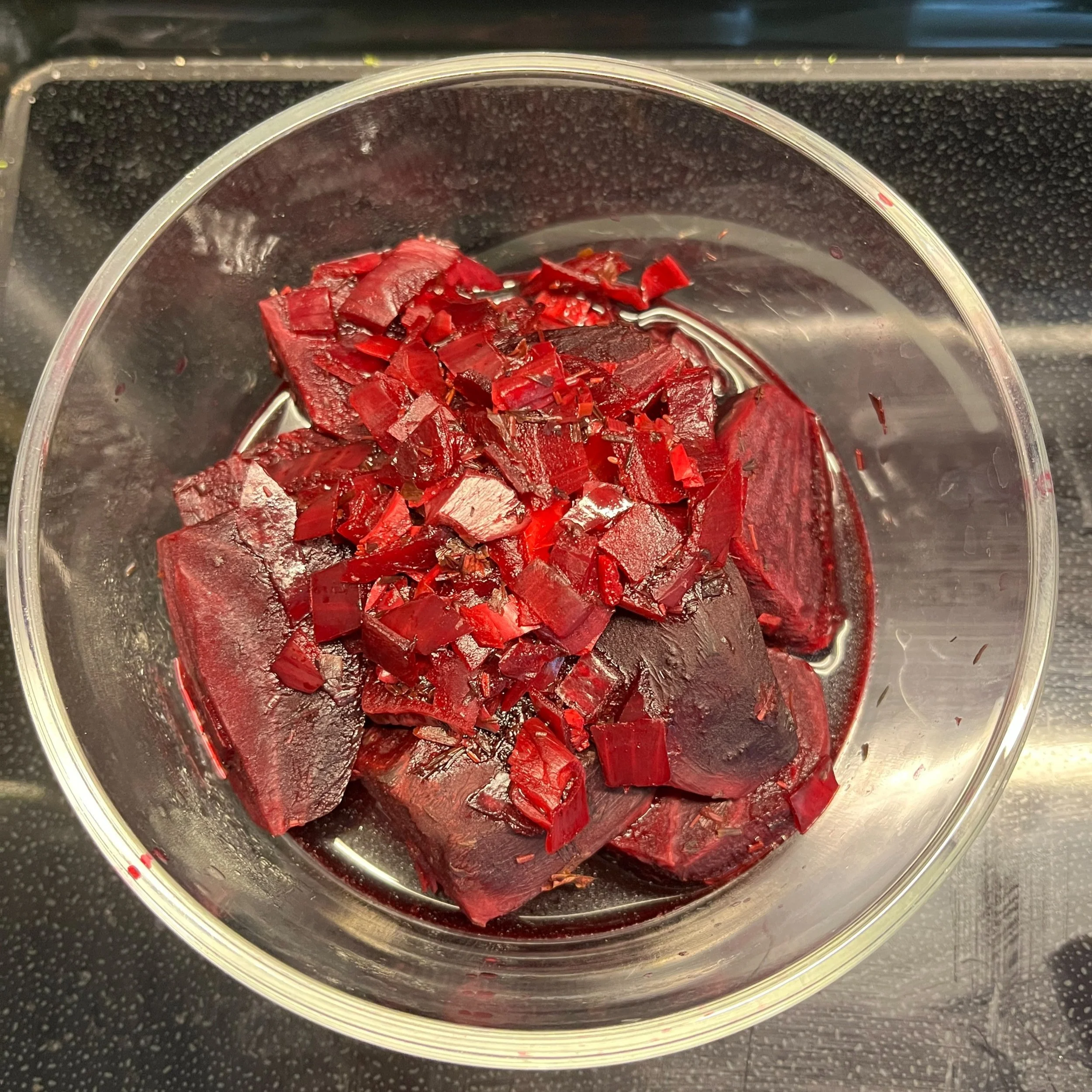
I’m a simpleton when it comes to food and so my method of cooking beets has been to boil them. It works fine for me but my girlfriend doesn’t love them. A few weeks ago we had a braised beet salad at one of our favorite restaurants, Undici, that was insanely good. At dinner I told her I wanted to make them that way.

I couldn’t find a good recipe and she suggested instead I use the crock pot. Wow what a game changer that was! I made them again today. Here’s what I did.
I took five beets, cut the stems off and then peeled them and cut them in half (quarters if they’re larger).
I added them to the crock pot and then added 1/2 cup of water, salt, thyme, parsley, chopped garlic and red onion. Closed the lid and let them cook on slow for 4 hours.
🤌🏽 They came out delicious. Give it a try.

Reconnecting Through Forests and Food
Click here: OneSource Health, February 11, 2024
“The person who takes medicine must recover twice, once from the disease and once from the medicine.”
William Osler
Reconnecting With Nature
I wanted to start this week by sharing something cool (no pun intended) pictured above. In Santiago, Chile, students partnered with nonprofit Sugi to plant a Miyawaki style pocket forest just off the road. After 12 months they compared the surface temperature of the forest to the tarmac road. The forest registered a temperature of 12ºC (53.6ºF) and the road 39ºC (102.2ºF), a 27ºC (80.6ºF) difference!
The Miyawaki method, developed by Japanese botanist and plant ecology expert Professor Akira Miyawaki, is a method of afforestation that mimics the natural recolonization that would occur in nature. Only plant and tree species that are native to the region are used which has the dual benefit of creating a more climate resilient forest and a familiar habitat for birds, insects, and pollinators.
Sugi has been working with local communities throughout the world to plant pocket forests like this one that help the climate and help cities reconnect with nature. Pocket forests only require 25 square feet, grow 10x faster than a normal forest would, and are maintenance free in 2 - 3 years. They can be planted anywhere, even in lands as arid as Jordan, and have the potential, as evidenced above, to help cool the land. Check out their work and see where you can fit a pocket forest in your community.
Old Beliefs Die Hard
I used to believe that health was the direct consequence of choice. That people struggling with weight or metabolic health had consciously decided not to take care of themselves. It’s not a belief that I’m proud of, but it’s also one that was less judgment and more “observation.” I viewed it as an unfortunate choice, and I hoped that they would find ways to take control of their life and enjoy the benefits of health. But as I’ve learned and observed more in recent years, I’ve come to realize how wrong my assumption had been.
For most people in this country, and growing around the world, the moment they enter this world the odds are stacked against them. The environment most people are forced to live in, filled with fake foods and unfulfilling jobs, gives them little choice or chance to better their health. As we’ve learned in recent years health and weight gain are influenced by so many factors, and for a lot of people those factors remain out of their control. This week I learned about another one.
I’ve been reading Matthew Walker, PhD’s book Why We Sleep? which details sleeps impact on health. Sleep quantity and quality affects everything from the type and amount of food we crave, to how we regulate glucose we consume and our insulin sensitivity. Key components of metabolic health which has been linked to numerous chronic diseases. Sleep efficiency also impacts memory development, our ability to solve problems, and to be creative. And not everyone is operating an equal playing field.
Approximately 30 percent of the population intuitively prefers going to bed later and waking up later, referred to as “evening types.” For this sect of the population the standard 9 am - 5 pm work schedule forces them to wake up before their brain is warmed up. As a result, night owls are more chronically sleep deprived, and therefore suffer more chronic illness from their lack of sleep, including depression, anxiety, diabetes, cancer, heart attacks, and stroke.
I’m pointing out this example to highlight the fact that things aren’t always what they seem. The person we know who “doesn’t want to” wake up, is always tired, suffers from brain fog, and makes poor “choices” about their health (i.e. eating foods high in refined carbohydrates and sugar), might not be choosing at all. Rather they’re being forced to operate in a society that runs counter to their biological clock.
To quote Matthew Walker, “the practice of natural biphasic sleep [long sleep periods at night and an afternoon nap], and a healthy diet, appear to be the keys to a long-sustained life.” And for many people sleep and nutritious food remain out of reach.
[If you want to evaluate your sleep, check out this 5 question assessment: SATED]
Food Is Medicine
A conviction which grows stronger and stronger each day is that every sustainable health journey must start first with an appreciation for and access to nutritious food. Food, fuel for our bodies, is the thing that holds it all together, and without it falls apart.
In 2023 44 million Americans suffered from food insecurity. However, nutrition insecurity—the inability to have consistent and equitable access to healthy, safe, affordable foods essential to optimal health and well-being—has become more prevalent than food insecurity.
In 2022 the Biden Administration held a National Strategy on Hunger, Nutrition, and Health. Out of that meeting came the Food Is Medicine (FIM) initiative which granted states the ability to use Medicaid and Medicare funding to replace “healthcare” with nutritious foods. Companies such as FreshRX and FarmBoxRX are two examples of companies taking advantage of this program to help their community.
Several other organizations have been working on ways to support and expand this initiative. ThinkRegeneration is hosting a handful of programs this year around the country to advance this program. FoodTank gathered more than two dozen leaders last year to discuss potential approaches. Last week I read through their summit summary and a few things stood out to me.
The most interesting thing I read was something I’ve always heard but never bothered to look into. Physicians are not taught nearly enough nutrition in Medical School. The report noted that efforts to make nutrition courses mandatory, rather than elective, are making progress. To which I thought, “nutrition isn’t mandatory?”
In doing some research I found that only 25 percent of schools actually require their medical students to take a dedicated course. Currently 9 medical schools, 5 percent of medical schools in the U.S., require nutrition continuing medical education. On average medical students receive less than 20 hours of nutrition education, not dedicated courses, over the course of a 4 year degree.
Which is egregious when considering the positive impact on healthcare that nutrition offers, as evidenced by various FIM programs. Medically tailored meals (MTMs), prepared meals delivered to individuals living with severe illness, have been shown to decrease healthcare costs by 16 percent among critically and chronically ill populations. Through fresh produce boxes and nutrition counseling FreshRX has helped patients lose weight, lower their A1c levels, and manage their blood pressure. FarmBoxRX has been able to improve patient outcomes and lower healthcare costs through incentivizing patients to comply with screenings and doctor visits.
But without adequate nutrition education, a vital tool, physicians continue to turn to high cost and detrimental treatments such as pharmaceutical drugs and surgery. The report noted that “high-risk patients visit pharmacies ten times more than they do primary care doctor offices,” and that “In a diagnosis-centered health care system, medical institutions and insurance companies can structurally disincentivize the holistic approach FIM requires.”
Said another way, the health care system, made up of medical institutions, insurance companies, and middlemen, aka profit driven centers, are incentivized to keep patients sick and reaching for drugs and procedures. As Brigham Buehler said, “why would they cure your disease when they can monetize it?”
With that said, Food Is Medicine is a huge step in the right direction. Through programs such as this, and the work of companies like ThinkRegeneration, FoodTank, Sugi, and others, it feels like I keep finding more people and organizations focused on the same goal. Revitalizing the land and the people back to a healthy state of homeostasis. There is a lot of work to do, but I’m inspired every day by the actions of a few to shape the future.
Cheers.
James.

How to Make Your Life Harder to Live Longer
Incorporate small discomforts to improve your life
Reading The Comfort Crisis provided further clarity to something I’ve been thinking a lot about recently. It’s the idea that contrary to common belief, mine included, we don’t have to work that hard to be “healthy.” Books like Ikigai and shows like Live To 100: Secrets of The Blue Zones are what have led me down this path. In societies where people live the longest no one is focused on hacks, routines, or supplements that we associate with longevity and lifespan in America. Yet they live long and beautiful lives.
Michael Easter drove this home for me in The Comfort Crisis by making something very clear. It’s the small actions, or inactions, throughout our day that are killing us. Whether you want to go back 100 or 1,000 years, the reality is that our ancestor’s way of life made it easy for humans to stay healthy because life was hard. Surviving required being active, self-reliant, aware, and resourceful. There wasn’t time to relax on the recliner, or wallow in regrets of the past or fears of the future. Compare that to the comforts of modern society where “it’s suddenly possible to survive without being challenged” and the reasons why we find ourselves amidst a growing health epidemic becomes clear.
The problem is that instead of getting back to a simpler way of life, which to many might be deemed a more challenging way of life, we’ve instead been sold a lie that vigorous exercise, extreme diets, and unregulated supplements and vitamins, and worst of all pharmaceutical grade medications will save us. So, for most of us, we’ve hitched our life raft to one or more of these items while letting most of our days and actions go by unchanged. The reality is that we don’t need special diets, or high-intensity workouts that leave us in a puddle of our own sweat, and we certainly don’t need pharmaceutical grade medications. We need instead to incorporate small actions into our day that will add up to big changes over the course of our lifetime.
A few weeks ago, my girlfriend joked and said I should publish a post titled “How to Make Your Life Harder to Live Longer.” She was making fun of all the shit I do throughout my day that from the outside appears to make my life harder, but in the long run makes my life easier (like wearing a 30 lb weighted vest as I stand typing this). We laughed, but she was on to something.
When you’re doing a little bit throughout each moment of the day it eliminates the need to play catch up and it eliminates the large swings up and down and it makes it easier to sustain a certain lifestyle.
The point of The Comfort Crisis is to create discomfort to awaken your best life. Small incremental changes add up and have the power to revitalize your life. So, with that said, I thought I’d share some of the simple ways in which I add a little suck to my day to see if there’s anything that you might be able to incorporate into yours.
How to Make Your Life Harder to Live Longer
Cook as many meals as you can. Not just for the obvious benefits like eating whole foods over processed or packaged foods, but because cooking will add extra time on your feet. If each meal requires 20 - 30 minutes to prepare and cook, that’s an additional 1 hour to 90 minutes of being active.
After your meals skip the dishwasher and wash your dishes by hand. Studies have shown that even a 10-minute walk after a meal has the ability to improve your metabolic health. Since it can feel burdensome to get up from a meal and go for a stroll, substitute the walk for standing at your sink and cleaning up the kitchen before sitting back down. Or time your dogs walks for after meals.
Skip the elevator or escalator and opt for the stairs. At the airport with luggage and running back into your apartment building to grab something you forgot, add some steps to your day.
Skip the shopping cart, instead use a basket. We aren’t hunters and gatherers anymore, but we can do our best to pretend. Carry your groceries around with you and practice your farmers carry. Weight training doesn’t have to wait for the gym.
Stand up instead of sitting down to put on your underwear, pants, socks, and shoes. It’s such an easy way to practice balancing on one leg. Maintaining balance as we get older is hugely important. According to the CDC falls are the leading cause of fatal and nonfatal injuries among persons aged ≥65 years (older adults), and older adult patients with hip fractures are 3–4 times more likely to die within one-year after surgery than general population. Practice your balance every day.
Hit your 10,000 steps. On average walking 1 mile burns 100 calories. 10,000 steps is about 5 miles or 500 calories per day. That’s 182,500 calories burned per year! There are so many ways to sneak steps in. Walk and talk. Park far away from the store or walk instead of driving. Cook and wash the dishes (see above). Go for a stroll through town. Clean up the garage. Pace around your house. All steps count.
Make your walks harder by carrying a load. In The Comfort Crisis he shares our evolutionary development to be able to carry heavy loads. Whether that was a basket filled with fruit or the body of a dead animal, humans evolved to carry weight over long distances. Put on a weighted vest, throw a weight in a backpack, or buy a proper Rucksack with 10, 20, or 30 lbs. You’ll feel the benefits immediately without the intensity of a workout. You can even put it on while standing at your desk.
Embrace the weather. On average Americans now spend 93 percent of our time inside in climate-controlled environments. If you live somewhere with cold winters, step outside for a few minutes each day with light layers to activate brown fat, a metabolically active tissue that burns white fat (fat we’re always trying to lose) in the cold. Conversely, get outside when it feels “too hot.” The stress of the heat will cause your body to work a little harder without much effort.
The point is if it’s change you’re seeking start slow. It doesn’t have to be an extreme new workout. It doesn’t have to be going cold turkey on a new diet. Small changes will lead to bigger ones. Figure out ways to resist the comforts in your life and see how it might change you.

Try This Move: Hollow Body Superset
A fun and dynamic exercise that works your core, triceps and chest
Hollow Body Skull Crushers + Close Grip Press
I used a 30 lb Ruck Plate for this exercise.
Lay on your back, bring your feet to the ground, heels to touch your fingertips. Tuck your tail bone, engage your core and straighten your legs.
Push the weight up, lift your shoulders off the ground.
Bring the weight slowly towards your head keeping your elbows tucked in.
Slowly lower the weight towards the top of your head then squeeze through your hands and arms to bring the weight back up.
Once you've completed the skull crushers, bring the weight back over your chest, squeeze the weight as you lower towards your body, elbows tucked.
Push the weight away as you keep your body engaged.
3 sets x 10 reps each
Meals & Recipes: Healthy Fats, High Fiber
Wild salmon, lentils, roasted carrots, avocado and red onion

Spicy Salmon with lentils, roasted carrots, red onion and avocado.
Spicy Salmon. Start with wild salmon. I’ve been enjoying frozen wild sockeye salmon from Whole Foods or Sprouts (grocers closest to me), or fresh wild Sockeye from Trader Joes. Preheat the oven to 425. Lightly coat a baking sheet with olive oil and a few pinches of salt. Place the salmon skin side down. In a bowl mix 1 tbsp of: honey dijon mustard, Primal buffalo sauce, Sweet Baby Rays Hot Sauce, and stone & ground mustard.

Sprinkle 1 pinch of: salt, black pepper, onion powder, and 1 garlic powder on the filet side. Spread mustard evenly throughout the filet. Cook for 8 - 10 minutes.

Lentils. Add 3 cups of water or vegetable brother to a pot. Add 1 cup of green lentils. Bring to a boil, then reduce to a simmer and cover. Cook for 45 minutes, covered. Taste for tenderness before removing from heat. Strain the lentils and return them to the pot.
Roasted Carrots. Buy a bag of organic baby carrots, to a bunch of regular sized carrots. Preheat the oven to 425. Chop them on a slant into 1 inch pieces (bite size). Toss in a bowl with 2 tbsp olive oil, 4 pinches of salt, 1 - 2 tsp of red pepper flakes, 2 tbsp of honey. Cook for 20 - 25 minutes.
Assemble. Add enough lentils to cover the bottom of the bowl. Cut 1 salmon filet in half and add it to the bowl. Add a handful of carrots, 1/4 sliced avocado and 1 slice of chopped red onion. Top with red wine vinegar and few pinches of sea salt.
Buon Appetito!
Finding Connections The Washington Post Missed
Click here: OneSource Health, February 4, 2024
“There’s a big difference between 20 years of experience and the same year lived 20 times”
Photo by Katie Smith on Unsplash
A Potential Link Between Gut Health and Colon Cancer
I wasn’t intending to but Colleen Cutcliffe, a scientist with a Ph.D. in Biochemistry and Microbiology, sent me down a rabbit hole this week. Ever since I’ve learned how corrupted the media has become, specifically as it relates to pharmaceutical drugs and healthcare, it seems like I keep running into more examples.
A couple of weeks ago I shared this article, Colon cancer is rising in young Americans. It’s not clear why. from The Washington Post as an example of their intention of sowing doubt in the media. The article offers no concrete reasons and instead contradicts itself the moment it makes an assertion about a possible cause, and uses the exception to prove the rule.
From the article, “Although some doctors have pointed to bad diet, alcohol use and lack of exercise as factors, [Whitney] Jones notes that the actor Chadwick Boseman, the star of ‘Black Panther’ and other movies who died of colon cancer at 43, ‘was hardly a smoking, drinking guy. He was a young, vigorous person.’”
Sentences like this one are intended to lead readers to believe that it’s all up to chance, and Group 1 carcinogens like alcohol, processed food, and being sedentary “might” play a role. Whitney Jones, who’s quoted throughout the article, is a gastroenterologist who consults for Grail, a company using liquid biopsies to detect cancers in the early stages. Grail is not invested in preventing cancer.
When I tuned in to listen to Colleen Cutcliffe discuss gut health with Peter Attia on The Drive, I wasn’t expecting to find answers that The Washington Post’s had ignored. But I did.
Gut health, or more specifically, gut microbiome, is a topic that’s grown in popularity in recent years as research continues to find links between poor gut health and metabolic disease which can cause chronic illnesses such as diabetes, obesity, heart disease, and yes cancer. Scientists have focused on gut microbiome in part because of how modifiable it is.
Dr. Cutcliffe points out that the two main ways to modify your gut microbiome are through nutrition, consuming a diversity of foods, and avoiding antibiotics, which she describes as “setting off a nuclear bomb in your gut.” One of the most important nutrients for your digestive tract, which runs mouth to anus, is fiber.
Fiber, insoluble fiber in particular from fruits and vegetables, acts as a prebiotic, food that feeds the organisms that make up your gut microbiome. When fiber is processed in your gut it produces a short-chain fatty acid called butyrate. Butyrate contains anti-inflammatory properties and has been shown to act as a tumor suppressant in the colon. Consuming a low fiber diet, which generates low levels of butyrate in the intestinal tract and colon, leads to poor colon health and a higher incidence of colon cancer.
After hearing this I decided to go back and re-read the Washington Post article to see if there was any mention of butyrate or fiber and its connection to colon health. I thought surely if I could stumble upon the connection a journalist whose job it is to investigate the topic they’re covering would’ve found it also.
In the nearly 3,000 word article the word butyrate doesn’t appear at all. The words “fiber” and “microbiome” appear just once each, and the word “gut” appears twice. The closest they come to touching the science is in this sentence, “…systemic factors could be at work, such as changes in gut bacteria — the microbiome — according to medical experts.” [emphasis mine]
There is also no mention of the fact that 95 percent of Americans are consuming only half of the 25 – 30 grams of recommended fiber each day. Nor do they mention the fact that the average American now consumes 70 percent of their daily calories from ultra-processed foods that are stripped of fiber. Calling attention to these facts would mean calling to account the large food manufacturers that pay their bills.
It would also mean ruffling the feathers of the pharmaceutical and healthcare companies that sell drugs and treatments to cancer patients, and also sponsor their “journalism.” Without patients there is no profits.
To be sure, other factors could be, and likely are, impacting the rise in colon cancer diagnoses. But to avoid discussion of a very clear connection, one that can be improved through behavioral changes, is nothing short of criminal.
We’re living in one of the most unfortunate of times where the institutions we’re supposed to trust have been corrupted beyond recognition. Fortunately, we also live in an age where information and answers are available if we’re willing to invest the time to look for them, and question what we’re being told. Take everything you read or see with a grain of salt, because most of the time there’s an agenda you don’t yet know about.
Cheers.
James.
Resources:
More than a microbiome scientist, our pioneering CEO is a mom
CBS’s 60 Minutes News Segment Was an Unlawful Weight Loss Drug Ad, Physicians’ Complaint Alleges
Colon cancer is rising in young Americans. It’s not clear why.
Grail - In pursuit of innovation to solve healthcare’s most important challenges
The Drive with Colleen Cutcliffe, Ph.D. - Gut Health and the Microbiome
Closing America’s Fiber Intake Gap
Butyrate: A Double-Edged Sword for Health?
Trends in Consumption of Ultraprocessed Foods Among US Youths Aged 2-19 Years, 1999-2018

Meals & Recipes: Breakfast Veggie Scramble!
Eggs, chopped white onion, tomato, Gouda 🧀, potato, broccoli, and arugula

Activist Scramble: 2 eggs, white onion, tomato, Gouda, potato, broccoli, arugula, black pepper, crushed red pepper and salt
Cooking Instructions:
Preheat a pan to medium heat.
In a bowl combine 2 eggs, 1 slice of chopped white onion, 1 sliced Campari tomato, 1 chopped slice of Gouda cheese 🧀, 1 handful of sliced boiled potato, 1 handful of boiled broccoli, cracked black pepper, 1 pinch of crushed red pepper, and 1 pinch of sea salt.

Add 1 tbsp of olive or butter to the pan and add the mixture from the bowl. Allow to cook for 3 - 4 minutes. Then add a handful of arugula.

Continue to mix and scramble as the egg cooks!
Enjoy!

Sharing Some Thoughts
Three completely separate thoughts on my mind this week.
Doing Less
So much of life is about the things you don’t do as opposed to the things you do do. It’s a hard concept to grasp because a lot of times it’s things that are not visible to other people or visceral to you and often seem immaterial. Like denying the impulse to open my lap top when I sat down for lunch.
There wouldn’t be any real harm in searching for an AirBnb for an upcoming trip, or editing my newsletter one more time, while I’m eating. In fact, both of those things would be viewed as constructive to most people. Myself included. But opening my lap top during lunch has unintended consequences.
Like robbing myself of getting lost in thought for 30 minutes. Like not fully appreciating the taste, sight, and smell of my food. Or not being present when my girlfriend asks me a question, or asks me to come look at the birds.
Not doing has become a powerful tool in the modern age. Fighting your impulses to do can have positive consequences. Doing less actually has the power to make you more productive.
Awakening
I think the problem lies in the word itself. It implies an immediate rebirth. But really all it signifies is the beginning of a journey towards a higher understanding of what life is, or the beginning of a search for the meaning of life. But it by no means signifies reaching the end. And I think that’s where people get messed up.
Everyone is always looking for the magic pill or the immediate fix. We’re a species that feeds on instant gratification. To become awakened is no exception. The expectation is to find out the truth and understand it all in one session, leading people to seek out experiences that they think or have heard will finally provide it.
Psychedelic trips are the primary example of this. Tripping on a psychedelic for many people might provide a glimpse behind the curtain, but that’s all it is, a glimpse. The truth is only unveiled with practice.
I’ve seen and spoken to many people, friends and family, who have peaked into the other side, but the demands of their “life” constantly tug at them and keep them from ever fully exploring the reality they know to be true. The investment of time, energy, and effort, is too much for a result that is not guaranteed. And the public consensus is to not pursue it.
Instead, the status quo, the ways things always have been is the thinking that consistently prevails. Everyone is afraid of an unfamiliar way of life, that promises freedom and equality, but has no room for ego.
Workout Hack When You’re Short on Time
There’s two things you always want to avoid. Skipping a workout and skipping your warm up. The key to long term success in the gym is to be consistent. And one of the keys to staying injury free is to warm up before your workout.
But the reality is sometimes we just don’t have the time to get in a full workout AND warm up. In those cases we usually end up sacrificing one or both. We either skip our warm up and rush through our workout. Or we scrap the whole workout knowing we won’t have time to do it all.
When this happens I like to mesh the two together and warm up as part of my workout. Saving me time while also saving me from injury.
I do this by using my first set of exercises as my warm up. Rather than getting right into heavy weights and high intensity movements I back everything off and use my first sets to prime my body for the remainder of the workout.
Over the last two months I’ve been training using three circuit workouts. In this case my first circuit is my warm up and the last two are my working sets.
It’s true I’m not going to get the same results as I normally would, but backing off one circuit is better than missing a whole workout. Using my first circuit as a warm up is better than getting injured and missing a handful of workouts.
I read this advice recently about writing. It went like this, write down in one sentence the point you’re trying to make in the piece your writing. At the end come back to that sentence and keep what supports that point and cut out what doesn’t.
If there was one line to write about the point of your workouts it would be, to stay consistent. Keep anything that supports that and cut out everything that doesn’t.